
- LIFESTYLE
- FASHION
- FOOD
- ENTERTAINMENT
- EVENTS
- CULTURE
- VIDEOS
- WEB STORIES
- SPORTS
- GADGETS
- CAR & BIKE
- TRAVEL
- SOCIETY
- GALLERIES
- NORTH EAST
- INDULGE CONNECT

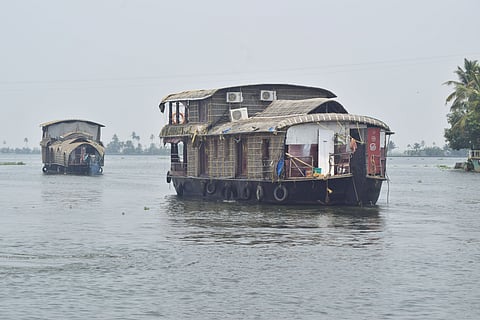
Houseboats have always been a very unique mode of experience. What started off as a means of transportation, especially in the beautiful Dal lakes of Kashmir, soon spread into one of the major means of economy and in recent time, sustainable tourism. But up North isn’t the only place one can find houseboats in India. Down South, in the beautiful backwaters of Kerala, several houseboat hotels are stationed to welcome guests every year. In the East, the Sundarbans are no way behind. These houseboats travel some distance and give you a unique, picturesque experience of the mangroves. Now, while you are in the houseboats amidst Nature, you probably think this is a sustainable practice. But is it truly so? Here’s putting the spotlight on some of the grey areas that need to be upgraded for thie model to truly fall under responsible tourism.
With a growing consciousness towards environmental pollution and individual or community initiatives to conserve it, people ponder the pros and cons before committing to something. While many visit a houseboat for the thrill and legacy of it, modern travelers, especially conscious ones, might take a moment to see if their accommodation is truly sustainable or there are hidden adverse effects. Here’s a look at what could go wrong.
Sanitary discharge: One of the major concerns that haunt people are what happens to the sanitary waste? Do they flow directly into the water? Then that would amount to water pollution. Bacteria, chemicals, excess nutrients directly impact the algal bloom and coastal ecosystems.
Engine system: Eco-friendly travel also depends on the kind of engine system the houseboat has. Most of them travel along the waters thus they usually need diesel or gasoline to run. Any fuel leakage into the water can be disastrous. Moreover, a running engine also contributes towards air and noise pollution.
Solid waste discharge: More often than not, people tend to throw wrappers or organic waste straight into the waters. While non-bio degradable wastes clogs the gills of fish and enters their body causing them distress, bio-degradable wastes should also not be directly thrown without treatment.
Excessive houseboat stationed on waters: Another environmental impact of houseboat tourism includes multiple houseboats being stationed on water, blocking sunlight, water flow, or growth space for the aquatic organisms.
How to maintain sustainable houseboat tourism practices?
After going through the adverse effects houseboats can have on the aquatic ecosystem one can only brainstorm on how to make it more environment–friendly. First, they can run on solar power and electric motors. Second, separate wastage tanks can be built that helps in collecting the sewage and sending it for treatment instead of direct disposal. Third, intelligent designs that enable appliances to be used on solar power and space consumption which doesn’t disturb the natural ecosystem.
Thus, houseboats are indeed a beautiful experience but all it needs is a touch of innovation to make it truly eco-friendly, and then one wouldn’t have to worry about embarking on frequent houseboat tourism around the world.
For more updates, join/follow our WhatsApp, Telegram and YouTube channels.