
- LIFESTYLE
- FASHION
- FOOD
- ENTERTAINMENT
- EVENTS
- CULTURE
- VIDEOS
- WEB STORIES
- SPORTS
- GADGETS
- CAR & BIKE
- TRAVEL
- SOCIETY
- GALLERIES
- NORTH EAST
- INDULGE CONNECT

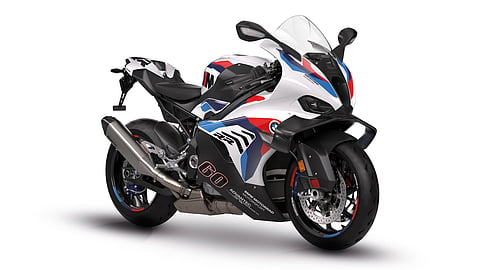
The S1000RR originally debuted in 2009 and immediately disrupted the global superbike market. At its launch, BMW claimed a lot of segment firsts and journalists over the decade said they were all up to the mark. The 2026 version has just been unveiled, and the initial feel is one of a more refined, more powerful experience. Despite experiencing heavy monsoon rains and congested city traffic, the motorcycle's sheer thrill, advanced technology, and engineering capabilities showcased a new side of litre-class motorcycling.
The motorcycle's styling has evolved from its historical asymmetrical headlights to a sharper, aggressive front fascia with "shark-eye" LED lighting. The bike features massive aerodynamic front winglets designed to increase front-wheel downforce, along with integrated brake-cooling ducts that maintain consistent stopping power during aggressive riding. Side fairings feature shark-gill vents that optimise airflow and overall high-speed stability. The bike came loaded with high-end hardware, including a lightweight magnesium subframe, electronic dynamic suspension, carbon fibre wheels, adjustable footpegs, and an Akrapovič exhaust system. Every panel is heavily sculpted for weight reduction and aerodynamic efficiency.
The bike features BMW’s signature 6.5-inch colour TFT display, navigated via a multi-controller wheel on the left handlebar—an interface design that BMW has since standardised across its lineup. The switchgear includes controls for cruise control, multi-level traction control, heated grips, and riding mode selection. Through the display menu, riders can adjust Dynamic Damping Control (DDC) settings, inspect the Tire Pressure Monitoring System (TPMS), and toggle HSC Pro (Hill Start Control / Hill Hold Assist). Bluetooth connectivity allows the display to handle phone calls, music playback, and turn-by-turn navigation. The aspect that impressed us most is that customising the display to show only essential parameters minimises distractions, allowing the rider to stay focused on controlling this high-performance machine.
At the heart of the BMW S1000RR is an inline four-cylinder engine producing 210 horsepower, powering a motorcycle with a curb weight of roughly 209 kg. This power-to-weight ratio makes it one of the lightest and fastest motorcycles in the litre-class superbike category, accelerating from 0-100 km/h in 3.2 seconds. The engine incorporates variable valve timing (BMW ShiftCam technology), optimising camshaft timing to deliver strong low-end torque, mid-range punch, and top-end acceleration up to the redline. Demonstrating its performance, even in "Rain" mode, the bike easily reaches 215 km/h in third gear. Power delivery is managed seamlessly through a bi-directional quick-shifter, a slipper clutch, and multi-stage traction control.
A standout highlight is the bike's chassis stability across various speed ranges. Comparing it to competitors like the Aprilia RSV4 and Kawasaki Ninja ZX-10R, the S1000RR feels exceptionally planted, whether travelling at 5 km/h in urban crawling conditions or approaching 300 km/h. Furthermore, the steering response is millimetre-precise; minor inputs at the clip-on handlebars instantly translate into chassis adjustments.
Over its 15-year production history, the S1000RR platform has demonstrated strong mechanical and electronic reliability. The primary drawback observed during testing was engine heat buildup during heavy bumper-to-bumper traffic jams. The BMW S1000RR successfully blends world-class track capability with daily rideability.
Priced at ₹23.25 lakh, ex-showroom
For more updates, join/follow our WhatsApp, Telegram and YouTube channels.