
- LIFESTYLE
- FASHION
- FOOD
- ENTERTAINMENT
- EVENTS
- CULTURE
- VIDEOS
- WEB STORIES
- SPORTS
- GADGETS
- CAR & BIKE
- TRAVEL
- SOCIETY
- GALLERIES
- NORTH EAST
- INDULGE CONNECT

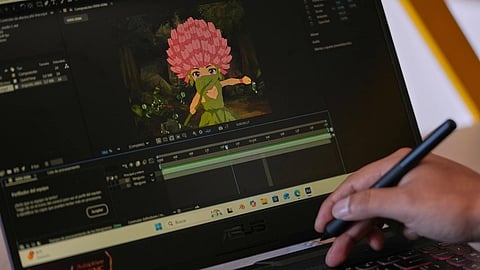
High in the Ecuadorian Andes, where dense clouds settle over terraced fields and villages stitched into the mountainsides, a new form of storytelling is taking root. Among the Otavalo people of Imbabura province, a group of young Indigenous filmmakers has turned to anime to strengthen pride in their community’s ancient culture and, most urgently, in the Quichua language. Their animated short film, We’re Aya, is their first step in using modern media to reconnect Otavalo children with traditions that have slowly eroded in a rapidly globalising world.
The nine-minute film follows Aya, a mythical Otavalo warrior, and a constellation of spirits, guardians and ancestral characters who embark on a symbolic journey watched over by the condor. For Andean communities, the condor is more than a bird: it represents strength, protection and the enduring rhythm of the natural world. Drawing inspiration from the works of Japanese animator Hayao Miyazaki, the filmmakers situate the story in the real landscapes of Imbabura. Its waterfalls, volcanic slopes and woven fields form a visual bridge between the region’s ancient cosmology and the contemporary aesthetics of anime.
Director and producer Tupac Amaru explains that the project emerged from a growing concern within the community: that Otavalo children were increasingly detached from Quichua, and consequently from the worldview and values encoded within the language. As global influences accelerated, he says, the Otavalo were left with two choices — to isolate themselves in order to protect their culture, or to engage with the world and re-express that culture through new creative forms. We’re Aya, performed entirely by twelve Quichua-speaking characters, embraces the second path.
“Quichua is the vibration that gives meaning to existence,” Amaru says. Losing the language, he adds, means losing a vital source of belonging and spiritual energy. Many Otavalo parents worry that children who do not learn Quichua are missing essential tools for understanding their ancestry and their place within the community. The film aims to counter that shift by presenting Indigenous mythology not as relics of the past, but as living stories woven into a vibrant, animated universe.
The creative team behind the film has drawn deeply from longstanding Otavalo traditions. Creative manager Yarik Sisa notes that certain scenes are rooted in customs that continue even today. One sequence features musicians taking their instruments to energetically significant points in the landscape on the eve of a celebration, a practice believed to endow instruments with “soul.” These small ceremonial gestures are stitched subtly into the narrative, affirming that ancestral practices can coexist with contemporary storytelling techniques.
Among the film’s central characters are Ayaruku, representing a resilient and untameable spirit; Ayawa, who embodies the feminine and the sublime; and Ayaku, a child symbolising tenderness, curiosity and continuity. Together, they dance, stomp rhythms into the earth, and channel the collective energy of their people as they make their way into a dark cavern. The cavern represents the challenges of globalisation — a symbolic unknown into which young generations may enter without guidance. Inside, spiritual forces assign them the role of becoming “new seeds” for future Otavalo identity.
One of the film’s concluding moments returns to the intimacy of family. An elderly man speaks with his granddaughter, who promises she will grow into a woman “strong as a rock,” committed to defending their culture. With gentle resolve, the grandfather urges her never to abandon that promise. It is a scene that echoes conversations taking place across the Andes: elders trying to safeguard traditions, and younger generations looking for meaningful ways to honour them.
For creative director Malkik Anrango, We’re Aya is just the beginning. The team hopes to produce more animated stories and even video games entirely in Quichua — creations “made by Quichuas in a Quichua environment,” as he describes it. Entering the global gaming market would not only broaden representation but also prove that Indigenous creators can innovate within digital spaces while staying rooted in their cultural identity.
In a mountainous region known for its textiles, crafts and music, these filmmakers are weaving a new kind of tapestry — one in which ancient mythology and contemporary animation converge. Their work reflects a growing movement within Indigenous communities across Latin America: reclaiming cultural expression by embracing technology on their own terms.
By blending anime with ancestral values, We’re Aya invites young Otavalo audiences to see themselves — their language, stories and landscapes — reflected in a medium they love. In doing so, it transforms animation into a bridge between past and future, offering a dynamic way to strengthen identity in a world that is constantly shifting.
For more updates, join/follow our WhatsApp, Telegram and YouTube channels