
- LIFESTYLE
- FASHION
- FOOD
- ENTERTAINMENT
- EVENTS
- CULTURE
- VIDEOS
- WEB STORIES
- SPORTS
- GADGETS
- CAR & BIKE
- TRAVEL
- SOCIETY
- GALLERIES
- NORTH EAST
- INDULGE CONNECT

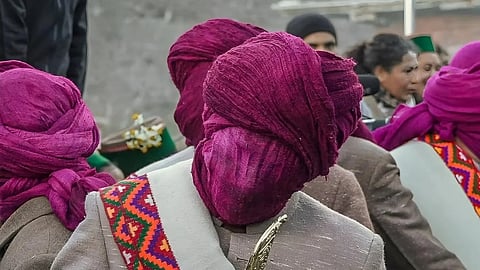
Raulane Festival is an old ceremonial, rural community ritual connected to local mythology. Men cover their faces and wear complete bridal gowns or appear as grooms, complete with veils, gloves, and colourful, cleansed garments. They transform into "ghost-like" wedding figures - graceful, very respectful, and very mysterious wedding figures - while parading through the streets and pathways surrounded by trees. The spectacle is bewitching and somewhat surreal. In a sense, it is a performance, but it is also a spiritual ritual of divinity, and it is also a respect to the ancestors.
Raulane is deeply connected to local perceptions/beliefs of fairies (called deohne). Fairies are mythical creatures often seen in folklore, tied to nature, the forest, and ancient Himalayan myths. The masked males on the festival night are essentially seen to be fairies or of some type of supernatural wedding visitors manifesting circumstance/our reality to marry and transition the human space to outside of this world. In many villages, the ritual is also connected to ancestor memory and a gesture of thanks and blessings for community stability and harmony, fertility, and prosperity.
Traditionally, the festival occurs at a specific time in winter or early spring when the valley is cold and stark contrast/view, poetically, to the brightness of all of the dresses and dance. The procession of the wx masked figures through the cold, snowy highlands reads as some symbolic life/death/rebirth ceremonial dance. Some even suggest the festival functions as a protective invocation: we manifest as these exploitable fairies to ward off evil and experience twin-identity, similarly to the framework of the social situation/culture.
What recently caught the attention of Raulane was the viral images of brides and grooms in bridal gowns, veiled, gloved, and moving together as brides and grooms, as beautiful, bizarre, haunting images transcended far beyond Himachal Pradesh. People on social media were intrigued about the costumes, but the festival’s connection to mythic traditions, defiance of gender presentation, and associated powerfulness to traditions are what drew wide fascinated attention.
Videos and photos raised widespread inquiry: who are these masked bride-grooms? Why do they do this? A sense of mystery deepens their appeal. For many observers, the festival provides a fresh, yet very human glimpse into Himalayan culture, spirituality and folklore.
Local communities continue to practice Raulane as a means to reconfirm their heritage. Such practices have not yet generated tourism. However, attention drawn to the form through a viral moment could potentially lead to tourism. Locals stress that it is not a tourist attraction or a costume party; it is a real practice, with real stories, beliefs, or a seasonal or time-sensitive cultural way of being.
For more updates, join/follow our WhatsApp, Telegram and YouTube channels.