
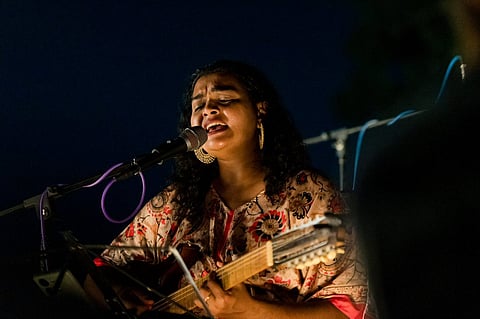
Sage for the Ages brings jazz, neo-soul and protest to Hyderabad

Blending jazz with Neo-soul, psychedelic textures and ambient influences, Sage for the Ages has built a sound that is as immersive as it is thought-provoking. Brainchild of vocalist-songwriter Kirtana Krishna, whose songwriting moves effortlessly between intimate reflection and urgent social commentary. Their latest album, R-Evolution, draws from lived experiences in Auroville while grappling with larger questions around climate, power, protest and collective imagination. With their upcoming show in the city, Kirtana reflects on the band’s journey, the philosophy behind its name, and the belief that music can both move people and spark conversations.
Sage for the Ages brings an immersive blend of music to Hyderabad, turning Auroville’s climate battles into a powerful call for protest and collective imagination
Excerpts:
The name Sage for the Ages feels reflective. What inspired it, and how does it connect to the music?
The name of the band needed to reflect its philosophy and intention. I always wanted to make music that felt nostalgic but also held deep truths, whether personal or universal — as I discovered more about each. Sage for the Ages came to me as a complete name one day and I knew it fit well with what I wanted to do. But it was only recently that, with the help of a friend, we decoded the exact meaning behind it. It’s sage wisdom for all ages — where “ages” means both time and people across generations.
Your sound blends various genres and ambient influences. How did this musical language evolve?
It’s safe to say that we’re a sum of our influences. Between the band's members, there’s a lot of music and people we admire, but what we all share is a deep love for Jazz and improvisation. The rest of the soundscape came from exploring how we could bring psychedelic styles into Jazz structures and Jazz-influenced chord changes. I think we’re getting close to achieving that vision, especially with our album, R-Evolution.
Your songwriting transforms personal experiences into larger social reflections. How do you balance intimacy and activism within your music?
I don’t think it’s an option today not to speak out about the matters that concern the world at large. Songwriting has always been an avenue for me to confront myself, overcome challenges and feel like I’m making a difference in the world in whatever way I can. It’s really simple, actually — if it hurts, tell the world, preferably through song.
The album R-Evolution engages with themes like climate, power and protest. What sparked the concept, and why did these themes feel urgent to explore now?
Much has happened in the place I live, Auroville. Trees have been felled to make way for someone’s imagination of what development is. But those of us who live here can’t see a superior way of life that doesn’t have trees. The cutting of trees was just the beginning. Along with forced development came evictions of residents, demolition of homes and murky land transfers between the government and unknown parties. When you zoom out, you see that the same thing is happening everywhere else in the country. This disrespect for nature and the environment is already causing us so much harm. I can’t believe that most people aren’t doing anything about it. I had to speak about the things that affect us because I’m deeply hurt by policies that don’t take nature and the environment into consideration. We’re all complaining about the heat — it didn’t happen overnight. All of this inspired the album.
How does the band navigate structure and spontaneity in performance?
There are set parts within a song, and there are parts that are completely open for improvisation. We all love the improvised sections because I think that’s where we’re most in our element. Every performance becomes a little different while still staying true to the song.
With viola joining the lineup, how has it influenced the band’s sound and arrangements?
It’s made the sound more raw, and a bit more pensive. It’s really bringing out the beauty in the movements and I feel it’s made the band’s sound more tactile.
What kind of emotional experience do you hope audiences take away from the performance?
The music is heavy, and I hope people leave feeling emotionally moved. I’m sure the arrangements create an atmosphere of nostalgia, of longing for what was, and a yearning for what could be.