
- LIFESTYLE
- FASHION
- FOOD
- ENTERTAINMENT
- EVENTS
- CULTURE
- VIDEOS
- WEB STORIES
- SPORTS
- GADGETS
- CAR & BIKE
- TRAVEL
- SOCIETY
- GALLERIES
- NORTH EAST
- INDULGE CONNECT

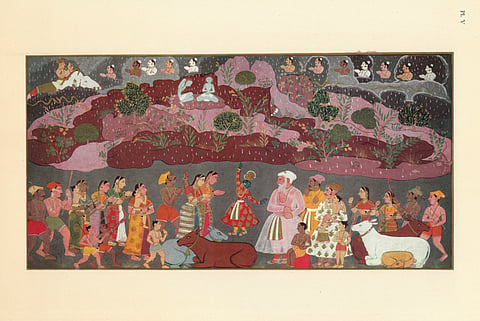
The Sandeep & Gitanjali Maini Foundation unveils Court To Collector: A Miniature Legacy, an exhibition promising a rare glimpse into the timeless allure of Indian miniature paintings. Traversing centuries, artistic traditions and the discerning eyes of collectors, the showcase is as much a celebration of artistry as it is of cultural preservation.
“Sandeep & Gitanjali Maini Foundation & Gallery G curated this exhibition to celebrate collecting as a powerful act of cultural preservation and to honour the enduring legacy of Indian miniature painting. The exhibition traces its roots to a significant 1901 portrait by Raja Ravi Varma, featuring Assari Virji, whose family’s commitment to art collecting spanned generations,” Gitanjali shares.
Featuring masterpieces meticulously sourced from premier exhibitions and globally renowned collections, Court To Collector brings together a rare archive of Indian miniatures, each with scholarly provenance and enduring significance.This new exhibition at Gallery G spotlights Indian miniature paintings
“The Virji family played a pivotal role by amassing rare and important miniature paintings, guided by curiosity, care and a deep respect for provenance rather than fleeting trends. By showcasing masterpieces sourced from eminent collections and premier exhibitions, the exhibition emphasises the role of collectors as custodians of heritage and tradition, inviting viewers to appreciate the richness and historic rhythms of Indian miniature art,” the curator reveals.
All the works were sourced from the family — a single source point. There are several themes of Krishna, from a young boy to an adult, that are prevalent across the exhibition. The originals of some of the folios displayed here have been shown in the Los Angeles County Museum of Art, while some belong to the JP Goenka collection. All the works show-cased here (58-miniaure folios) are from the Virji Family collection.
“Karl Jamshed Khandalavala (1904–1995) — a pioneering art his torian, lawyer, collector and connoisseur — whose scholarship transformed the understanding of Indian miniature painting — at a time when these works were often overlooked, his writings and exhibitions established them as masterpieces of global significance. His landmark publication, Pahari Miniature Painting (1958), remains a cornerstone of art historical study. Beyond his scholarship, his stewardship as trustee and chairman of the Prince of Wales Museum (now CSMVS, Mumbai) left an indelible mark on the cultural landscape of India,” she elucidates.
The exhibition showcases evolving visual vocabularies developed across various Rajasthani courts such as Bundi, Marwar, Kishangarh, Mewar and Amber-Jaipur. Each school cultivated distinct characteristics — ranging from differences in colour palettes, line refinement, spatial arrangements and architectural motifs — shaped by local patronage and by Mughal artistic influence. “The show’s central theme as SGMF was exploring how Indian miniature paintings, created for royal courts and patrons, found new life and significance as they journeyed into the hands of dedicated private collectors. Our objective is to bring miniatures back into the limelight,” she signs off.
On till November 30. At Lavelle Road.
For more updates, join/follow our WhatsApp, Telegram and YouTube channels.