
- LIFESTYLE
- FASHION
- FOOD
- ENTERTAINMENT
- EVENTS
- CULTURE
- VIDEOS
- WEB STORIES
- SPORTS
- GADGETS
- CAR & BIKE
- TRAVEL
- SOCIETY
- GALLERIES
- NORTH EAST
- INDULGE CONNECT

The history of Egyptian blue pigment dates back to 2500 BC, when the Egyptians discovered the first man-made colour. In contrast to using blue stones like lapis lazuli, this colour was manufactured following a carefully designed process.
Manufacturers combined quartz sand, a compound of copper, lime or limestone, and an alkali such as natron or plant ash, heating the mixture to temperatures ranging from 850°C to 1,000°C. This resulted in the formation of calcium copper silicate, referred to as cuprorivaite, which could be ground into powder form for making paints.
The production process involved meticulous planning. The first step was the acquisition of silica sand, limestone or chalk containing calcium, copper-based minerals like malachite or azurite, and natron. The above materials were then ground finely, weighed accurately in specific ratios, pressed into little cakes, and inserted into clay containers.
The mixture was fired in a kiln for several hours. While heating, the ingredients underwent reactions resulting in the formation of cuprorivaite – a mineral compound of calcium, copper, and silicate giving the pigment its signature blue colour. It was subsequently ground into powder, which, when combined with water and other binding substances, results in the classic Egyptian blue pigment.
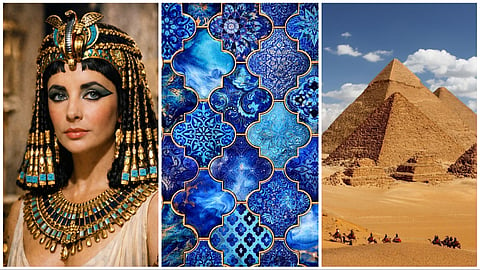
Egyptian blue became very popular very soon, since it was much cheaper compared to carving or inlaying blue stones. It was commonly used for decorating temple walls, tomb ceilings, statues, and jewellery. Egyptian blue was applied to paint the body of the god Osiris (the Egyptian god of afterlife, dead, and resurrection).
The use of this pigment lasted for over 3,000 years in Egypt and Mediterranean countries. It became less popular in the Roman period, as many painters became more fond of using red, yellow, and white. With the end of the Roman Empire, it became extinct in the Dark Ages.
In modern times, scientists have synthesized Egyptian blue to determine the way ancient craftsmen made it. They discovered that using malachite made a brighter blue than using azurite, and extended periods of heating and slow cooling resulted in the rich tone.
For more updates, join/follow our WhatsApp, Telegram and YouTube channels.