
- LIFESTYLE
- FASHION
- FOOD
- ENTERTAINMENT
- EVENTS
- CULTURE
- VIDEOS
- WEB STORIES
- SPORTS
- GADGETS
- CAR & BIKE
- TRAVEL
- SOCIETY
- GALLERIES
- NORTH EAST
- INDULGE CONNECT
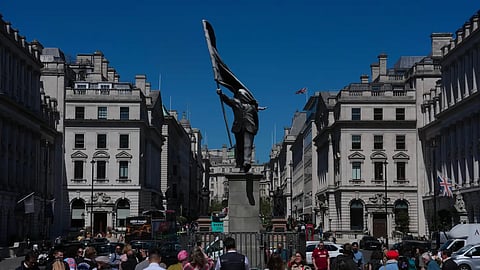
Elusive street artist Banksy has confirmed that a newly հայտնed sculpture in central London is his work, marking a rare shift in medium for the Bristol-born figure. The piece, depicting a man stepping forward from a plinth with his face obscured by a billowing flag, appeared overnight on a traffic island in Waterloo Place, not far from Buckingham Palace.
The artist shared a short video on Instagram, offering glimpses of the installation process carried out under the cover of darkness. The footage, laced with his characteristic dry humour, traces the work’s quiet arrival into one of London’s most symbolically loaded public spaces.

Before the confirmation, passersby had already begun to speculate. A signature scrawled at the base of the plinth drew curious onlookers, with locals and tourists pausing to photograph and interpret the piece. Its proximity to statues of King Edward VII and Florence Nightingale, alongside the Crimean War Memorial, places it within a historical continuum of British public monuments — though its tone feels distinctly contemporary
Banksy, best known for his stencilled interventions on urban walls, has built a global reputation since the early 1990s. His works, often laced with irony and political undertones, have been removed, auctioned and, at times, defaced. Despite commanding high prices in the art market, his practice remains rooted in anonymity and impermanence.
This latest sculpture extends that ethos into three dimensions. While statues traditionally commemorate, Banksy’s figure appears to question visibility and authority, its obscured face hinting at themes of identity, nationalism or erasure. As with much of his work, interpretation remains open-ended — and perhaps that ambiguity is precisely the point.
For more updates, join/follow our WhatsApp, Telegram and YouTube channels.