
- LIFESTYLE
- FASHION
- FOOD
- ENTERTAINMENT
- EVENTS
- CULTURE
- VIDEOS
- WEB STORIES
- SPORTS
- GADGETS
- CAR & BIKE
- TRAVEL
- SOCIETY
- GALLERIES
- NORTH EAST
- INDULGE CONNECT

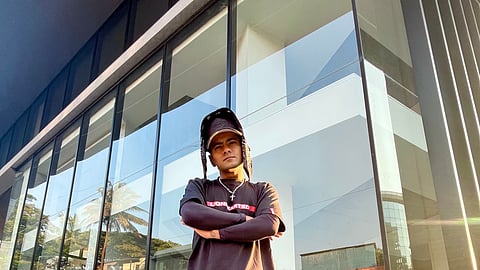
In Bengaluru, where every subculture finds a corner to grow, western dance forms have been quietly building their own legacy – shaped by studio floors, street crews and dancers who learned by watching, imitating, failing and starting all over again. Shiva S is one of them. Hip-hop dancer and choreographer, Shiva’s journey — from learning routines from the dancer community in his early days to winning the Freeze Jam Hip-Hop champion title in 2016 and representing South India at Red Bull Dance Your Style National Finals in both 2024 and 2025 — mirrors the city’s own evolution: a movement rooted in the past yet constantly stretching toward what’s next.
Shiva’s first encounter with hip-hop came during his college years, when a friend took him to a street dance battle at Mount Carmel College.”It was scary, but exhilarating. Everyone was so good and seeing them, I wanted to give it a try,” he recalls. From that moment, he dove headfirst into a world where small studios and parks became classrooms.
“I learned dancing through my community. I never went to a formal class. We would cypher — come together and dance randomly. There’s no competition, just experimenting,” he explains. Watching crews like Black Ice, Graffiti and mentors from Hip Hop India — Shiva absorbed techniques and styles that shaped his craft. The Bengaluru scene back then was competitive but healthy: a mix of support, shared learning and the thrill of battle. Competitions weren’t about followers or social media clout.
The city, however, was slow to embrace the culture. It gained recognition much later on, brought largely through Instagram. Streetwear brands, music influences and lifestyle shifts slowly brought the culture into the mainstream, though early adopters — dancers from the local hip-hop community — often got laughed at for their baggy pants and distinct style that everyone now wears. “I can’t really say when the Bengaluru scene arrived,” Shiva says. “For me, it was always just a small circle of people learning through YouTube and from each other. But once artistes like Rahul Dit-O and a few others started dropping rap tracks and getting attention, even the general audience — including my parents — finally understood what hip-hop and rap really were. That’s when the culture became more widely accepted in the city.”
Shiva’s journey wasn’t a bed of roses. “I used to battle a lot. I never gave up, I’m a very stubborn kid. I started battling in Chennai, Hyderabad and Bengaluru. I would take kids’ classes to make money, travel and enter over 30-40 battles, often not even getting into the top 32 or top 16. But I kept going,” he tells us. Everything changed in 2016 at FREEZE, organised by Black Ice Crew. “There were judges from outside India and winning the 1v1 Hip-Hop Battle completely changed my life. Everyone recognised me. From that moment, people started talking to me differently, addressing me differently. Dance became everything to me — it shaped the way I talk, dress and behave,” he recalls.
Today, Bengaluru’s hip-hop scene has evolved. Yet, Shiva believes the city still has work to do. “People need to learn the roots of hip-hop, not just copy a reel,” he says. “I’m not against it, but if you want the culture and authentic styles, you have to understand what you’re doing. Studios should teach foundations first and the general crowd needs to know hip-hop has its own clothing — it’s how we feel the groove. People, especially in Bengaluru, should stop judging women for wearing shorts or making fun of men’s outfits. That really needs to change. We’re also missing the old get-togethers where dancers connected and shared. Now everyone is busy with responsibilities and honestly, the industry doesn’t value dancers the same way it values singers or models. Budgets for dancers are the lowest, even though dance takes years to learn. If we were paid fairly, we could travel, learn in places like New York and Brooklyn and bring that knowledge back. This is something that definitely needs to be worked on,” the dancer explains.
Looking forward, he believes hip-hop is the future and his goal is to travel the world. “I want to go to Europe, Japan, the US — learn from people who live the life of hip-hop and then teach it. That’s my only goal. Learn, teach, learn, teach. Teaching is the most important part for me,” he concludes.
(Written by Prishita Tahilramani)