
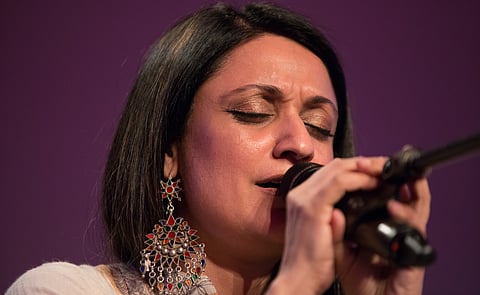
Sonam Kalra's Chaleya Momin celebrates hope, inclusivity, and unity

When music sends the message of peace, love and unity, the room falls silent and everybody listens. With Chaleya Momin—The Search, award-winning musician Sonam Kalra gave us more than a song. She gave us an anthem for inclusivity and hope in times of despair. The song is a collaborative result with Iranian visual artist Faezeh Sepehrsadeghian and Indian graphic artist Gopika Chowla.
What inspired the song, Chaleya Momin—The Search?
It was created to not just be a song, but an experience. The idea was to make it gentle yet powerful with the aim of drawing listeners from the very first note into a space that is meditative, emotionally moving and thought-provoking. The lyrics, which I wrote myself, speak of faith, love and inclusion in a world often lacking in humanity.
The song tells the story of a believer walking away from a world scarred by discord, discrimination, and division, searching for a sanctuary, a Mecca not on any map but etched in the heart of every being.
How did the collaboration take shape?
Despite working across different time zones and geographies, we used technology to co-create an animated representation of the song’s message. This wasn’t just a creative partnership, it was an act of sisterhood. Women are the carriers of peace and some of the fiercest truth-tellers, and our collaboration became a soft yet unshakeable call for peace.
What inspired the idea behind the video?
The idea for the video came directly from the lyrics of the song. From the start, I knew I didn’t want to appear in the video just singing. I wanted it to be greater than myself and to reflect the universal journey the song speaks of. Animation felt like the perfect medium being sensitive, fluid, and capable of capturing the metamorphosis at the heart of the song.
How has the response been?
The response has been quite special. Most of the people who have heard the song have done so through the video, so the reactions have been very different from other songs I’ve done. It’s not a ‘hit gaana’ but many have said that they found the song very moving. That is really the sort of response I wanted.
Can you take us through the instrumentation and composition of the song?
Musically, the song was carefully composed and co-produced with Saptak Chatterjee. We incorporated a variety of global sounds, using cello and sarangi together—using faint strains of tabla and choral harmonies as well. The composition eventually builds to a crescendo, with a final call layered over the refrain, creating an emotional and spiritual resolution
Was it difficult to find people to produce and support this song?
The song was self-produced! My collaborators resonated deeply with the message, and everyone involved in the song was very enthusiastic in helping bring the vision to life.