
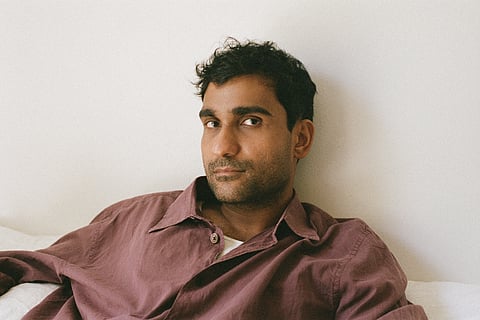
Prateek Kuhad trades heartbreak for healing through his third studio album

Prateek Kuhad has always had a way of making the deeply personal feel universal. For over a decade, his songs have soundtracked heartbreaks, long-distance calls, quiet victories and moments of self-reflection for listeners across the world. But with Full Moon Chamber, his long-awaited third studio album, the singer-songwriter turns inward once again — this time navigating themes of identity, transformation and belonging. Written over nearly three years between New York and Los Angeles, the 14-track record traces an emotional journey from uncertainty to acceptance. In conversation with Indulge, Prateek opens up about the personal shifts behind the album, the delicate balance between vulnerability and privacy, and why the best collaborations are often the ones you never plan.
Prateek Kuhad releases his much awaited 14-track third studio album Full Moon Chamber
Excerpts:
You describe Full Moon Chamber as documenting a period of significant personal change. Looking back now, do you see the album as a diary of that transition or as a way of making sense of it while you were living through it?
I think it was probably both. When I was writing the songs, I wasn’t consciously trying to document a particular period of my life. I was simply writing about whatever I was feeling or trying to understand at the time. Looking back now, the album almost feels like a diary because it captures those moments so honestly, but it also became a way of making sense of that period while I was living through it. It helped me understand myself a little better, and I think that’s one of the things music can do best.
The record moves from uncertainty to acceptance. Was that emotional arc intentional?
Not at all. The songs were written over almost three years and weren’t created with a sequence in mind. It was only when I started assembling the album that I noticed this progression. It felt like the record was telling its own story and once I saw that, it felt right to lean into it. Sometimes an album reveals something to you that you didn’t even know you were making.
The title Full Moon Chamber feels rich with symbolism. What does it mean to you?
I liked that it felt open to interpretation. It suggested a space where reflection and transformation could happen without defining exactly what that meant. Those ideas were already running through the songs, so when the title came along, it connected everything together. Once it appeared, it felt like the album finally had a home.
How did New York and Los Angeles shape this album?
Those cities definitely became part of the album, even if not in an obvious way. Los Angeles gave me space to reflect, while New York brought a different energy altogether. The songs aren’t necessarily about those places, but they became part of the environment in which the music grew. Every place shapes you in small ways, and those experiences naturally found their way into the record.
Vulnerability has always been central to your songwriting. Has your relationship with honesty changed over the years?
Honesty remains incredibly important, but honesty doesn’t always mean sharing every detail of your life. A song can be emotionally truthful without being completely literal. I’ve always found metaphors to be the most powerful because that’s where meaning can be created in different ways. I’m more interested in capturing a feeling than documenting an event exactly as it happened.
Many listeners associate you with heartbreak songs. Were you consciously trying to move beyond that image?
Not really. I wasn’t thinking about expectations while making the album. Relationships are still a big part of these songs, but so are identity, change, hope and acceptance. Those themes felt natural to me, so it wasn’t about moving away from anything — it was simply a reflection of where I was in life at the time.
After all these years, what remains unchanged about performing live?
Whether it’s a small venue or a large arena, whether there are a 100 people or 10,000, there’s always a palpable energy in the room. You feel the spirit of the people around you interacting with your own, and that often leads to unexpected moments. That’s the beauty of live music.