
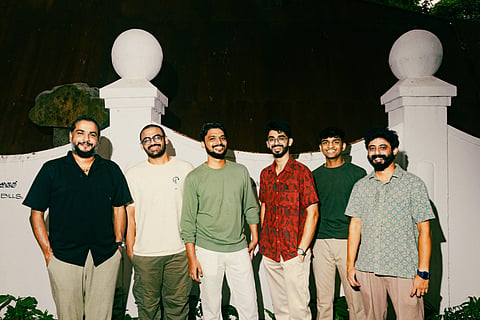
Derek and the Cats bring Bengaluru’s groove to Hyderabad, proving instrumental music can tell powerful stories without words

Equal parts tight grooves, big energy, and organised chaos, Derek and the Cats are one of Bengaluru’s most infectious instrumental acts. Blending funk, jazz, electronic textures, and razor-sharp musicianship, the seven-piece band has built a reputation for turning every performance into a celebration of rhythm. Their music moves between dance floor-ready grooves and evocative compositions, proving that lyrics aren’t the only way to tell a story. From tracks like Cubbon Park, inspired by a distinctly Bengaluru experience, to the deeply personal Leticia, their work is rooted in emotion, memory, and place.
Serving the song, not the solo: Derek and the Cats on restraint, emotion and India’s growing love for instrumental music
As they arrive in the city, Derek Mathias spills the beans about being committed to one thing above all else: serving the song.
Excerpts:
Instrumental music often asks listeners to bring their own interpretation. Have there been listener reactions to your songs that completely changed the way you think about them?
That’s the beauty of instrumental music — every listener brings their own story to it. Leticia is a song dedicated to my grandmother. She raised me, and she’s one of my closest friends.
Every day I spend with her feels like a gift. We ended one of our shows with that song, and afterwards two women came up to me in tears. They told me it reminded them of their late father and helped them process grief in a way they hadn’t expected.
That was the moment we realised the song had grown beyond what it meant to us. It no longer belonged only to our story — it had become part of someone else’s too.
What is one musical habit or rule you’ve consciously unlearned as a band over the years?
As musicians, it’s easy to fall into the trap of making things more complex than need be. Over the years, we’ve learned that complexity can sometimes get in the way of storytelling.
As fun as it is to play something technically challenging, if it distracts from the song’s theme or emotional message, it defeats the purpose. We’ve learned through experience that the song always comes first. Our job is to communicate an idea or a feeling as clearly as possible.
The biggest lesson has been choosing simplicity when it serves the music. Storytelling takes priority over showing off.
Do you ever find yourselves writing against your strengths—choosing restraint over complexity?
Absolutely. In many ways, restraint leads to creativity. On the new album we’re working on, we’ve been focusing on writing melodies that are simple, memorable and singable. The best songs often hide their complexity beneath great arrangements. If a section feels too complicated on the surface, we’ll usually rethink the arrangement so it still has depth and detail, but remains easy on the ear and enjoyable to listen to. For us, sophistication isn’t about sounding complicated — it’s about making something nuanced feel effortless (like Steely Dan).
When you’re arranging a track, how do you know when to stop adding ideas and let the groove take over?
Feel and taste are everything. You also have to be brutally honest with yourself. We often ask: what is the minimum number of parts required to communicate the feeling we’re trying to create? If a new idea makes the groove weaker or doesn’t add anything meaingful, it’s probably getting in the way.
If you listen closely to our music, there are very few moments when all seven of us are playing full parts simultaneously. Even when everyone is involved, each musician is often playing less than you’d expect — sometimes just a single note or a simple phrase.
That restraint creates space, and space is what allows every part of the groove to shine.
Instrumental music occupies a niche space in India. Have you noticed audiences becoming open to non-vocal music in recent years?
I think audiences have been listening to instrumental music for years without necessarily thinking of it that way.
A lot of electronic music — House, Techno, EDM, Dubstep — is largely instrumental. There might be a vocal hook or a repeated phrase, but most of the music is carried by the instruments and production. People don’t usually label it as instrumental music, but in many ways it is.
What’s changed is that audiences are increasingly open to forming their own personal connection with music. Without lyrics telling them exactly what a song means, they are free to project their own experiences onto it. That makes the connection deeply personal, and I think that’s one reason instrumental music resonates so strongly today.
Do you think music is heard differently because of streaming and social media, and has that changed the way you think about making albums?
Audiences absolutely consume music differently today. Playlists, algorithms and short-form content have become major discovery tools, and often a single moment from a song can introduce millions of people to an artiste.
That said, I believe albums are the most powerful artistic format.
A playlist or a viral clip might introduce you to a song, but an album is what turns casual listeners into fans. It allows people to step into an artiste’s world and experience a larger narrative. In many ways, an album is a sonic universe — one where every song contributes to a bigger story.
A hit song may get people through the door, but a great album gives them a reason to stay.
How can cities better support live music cultures beyond festivals and one-off events?
Every artiste needs time and space to grow. The biggest artistes in the world didn’t discover their voice overnight. They experimented, played countless shows, released imperfect work and gradually figured out who they were. For that process to happen, cities need venues and communities that give emerging artistes room to take risks and develop.
Playing music live is one of the most immediate forms of feedback an artiste can receive. It’s a real-time test of whether an idea connects with people.
At the same time, artistes can’t wait for the perfect ecosystem to appear. There’s a responsibility to create opportunities and experiment with unconventional spaces. Start small, be the first mover and give people a reason to gather. Strong live music cultures emerge when both artistes and audiences actively invest in them.