
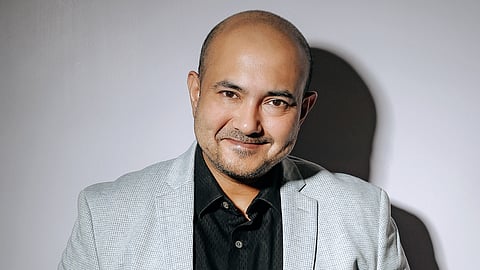
Rudrajit Roy on how the image of a caged bird gave way to his movie, Pinjar

Director Rudrajit Roy’s movie Pinjar is all set to become the people’s movie in two days. After a successful Chicago Premiere, followed by screenings in several prestigious film festivals including the Kolkata International Film Festival and International Indian Film Festival of Toronto, the movie is now on its way to find place in Bengal’s theatres. Ahead of the release, we catch up with Rudrajit who opens up about the making of the movie which boasts of an ensemble cast with Mamata Shankar, Satakshi Nandy, Joy Sengupta, Sagnik Mukherjee, Samiul Alam, Mallika Banerjee, Ishan Mazumder, Tathagata Mukherjee, and Swastidipa Rabidas.
Excerpts:
What was your inspiration behind making Pinjar?
The image of a bird in a cage stayed with me for years. It was both a literal image and a powerful metaphor for the invisible boundaries that shape our lives. My growing up years shaped me too… my parents who perhaps sometimes caged their dreams so that I could have the wings to fly . Over time, that image evolved into Pinjar , a meditation on empathy, resilience, and the enduring human desire for freedom, dignity, and self-discovery. And the elegance with which parents sometimes also thwart their dreams to allow their children to gain wings. A cage and dream of freedom is everyone’s story. Pinjar is everyone’s story.
What drew you to explore confinement and liberation through an ensemble cast?
Confinement is rarely experienced in a single form. Each character in Pinjar inhabits a different kind of cage , just like in life , whether imposed by tradition, circumstance, violence, expectation, or displacement. An ensemble narrative allowed me to explore these varied realities and reveal how the search for liberation connects people whose journeys might otherwise seem very different.
Among all the characters, do you relate to any personally, and why?
I believe there is a part of me in every character. As writers and filmmakers, we inevitably leave fragments of ourselves behind in the people we create. Yet, if I were to choose one character with whom I feel the deepest connection, it would be Jhimli.
She possesses a quiet sensitivity and an instinctive empathy that endures despite the limitations imposed upon her world. Her willingness to question what is accepted, rather than simply surrender to it, mirrors my own journey as a filmmaker , constantly examining the boundaries we inherit and searching for the possibilities that lie beyond them.
There is also something in her that speaks to the echoes of another life, of dreams not yet abandoned, of a belief that even in the face of adversity, all things remain possible if we dare to imagine them. Her journey reflects the obstacles we encounter both within ourselves and in the world around us, and the courage required to keep moving forward despite them. In many ways, Jhimli embodies hope, fragile at times, but enduring and perhaps that is why I find her story so deeply personal.
Tell us about your festival experience with the film.
The festival journey has been both humbling and deeply rewarding- from its world premiere in Chicago to screenings and selections across various international cities and diaspora audiences. But it has been profoundly moving to witness non diaspora audiences, who sometimes knew nothing of Bengal or even Kolkata, from different cultures, communities, and backgrounds connect with the film’s emotional core. That is the power of Pinjar’s journey and story. While Pinjar is rooted in a specific reality, its themes of dignity, resilience, compassion, and freedom have proven to be remarkably universal. It is immensely gratifying to see what began in one corner of the world resonate so strongly in another, reaffirming the power of cinema to transcend borders and bring people together through shared human experiences.
What’s one piece of feedback you received that has stayed with you?
A viewer once told me, “The bird in your film is not just trapped it is restless, alive, and waiting.” That observation has remained with me because it captured something essential about Pinjar. Confinement is never merely about limitation; within it, exists hope, resistance, and the longing for transformation.
As a director, what is your biggest takeaway from making this film?
The experience reinforced my belief that resilience often reveals itself in quiet ways. Pinjar was built on trust, generosity, and conviction, from artistes who gave more than was expected of them to communities that welcomed us into their lives. Those experiences brought an authenticity to the film that cannot be manufactured. That authenticity also found expression beyond the screen, extending into meaningful conversations around social awareness and impact. It’s these ripples that cinema creates that are so important and powerful.
Are you currently working on any new projects?
Yes, I am developing new work and exploring a number of stories that continue to engage me both emotionally and creatively. It is still early to speak about specifics, but I remain drawn to narratives that examine the human condition with empathy and nuance.
For more updates, join/follow our WhatsApp, Telegram and YouTube channels.