
- LIFESTYLE
- FASHION
- FOOD
- ENTERTAINMENT
- EVENTS
- CULTURE
- VIDEOS
- WEB STORIES
- SPORTS
- GADGETS
- CAR & BIKE
- TRAVEL
- SOCIETY
- GALLERIES
- NORTH EAST
- INDULGE CONNECT
For decades, conversations around Ritwik Ghatak have centred on his images: the fractured landscapes of Partition, refugee colonies on the outskirts of Kolkata, and faces marked by displacement and loss. Ghatak’s use of music in his cinema was no less radical. Never merely an accompaniment, it becomes memory, grief, political commentary and, at times, a voice that argues with the image itself.
Drawing from Bengali folk traditions, Hindustani classical music, Rabindra Sangeet and Western classical compositions, the director developed a sonic language like no other in Indian cinema. Rather than merely amplifying emotion, his music deepened and sometimes contradicted the image on screen.
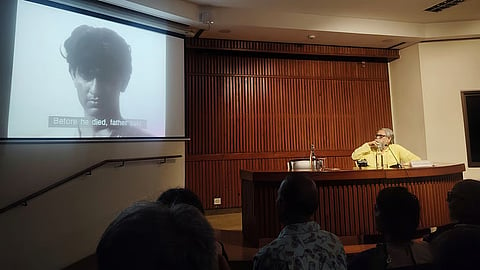
At an illustrated lecture titled 'Music in the Cinema of Ritwik Ghatak' at the India International Centre in Delhi, filmmaker Partha Chatterjee described how Ghatak used music “as a counterpoint and even a counter-melody” to the image, creating layers of meaning that extended far beyond the visible narrative.
Sound of a lost homeland
The Partition of Bengal remains the defining wound running through Ghatak’s work. Born in Rajshahi in East Bengal, now Bangladesh, he witnessed displacement firsthand, which became the emotional foundation of films such as Meghe Dhaka Tara (1960), Komal Gandhar (1961), and Subarnarekha (1965). Music was one of the principal ways through which he expressed that loss. The folk songs that recur throughout his films function as repositories of memory, evoking landscapes left behind and identities struggling to survive after Partition.
In Komal Gandhar, folk songs associated with union and marriage like the track Epar Padma, Opar Padma or Amer Tolay Jhumur Jhumur repeatedly surface. The irony is deliberate. Ghatak uses music to suggest possibilities of reunion precisely when the world of the film appears irreparably divided.

Music as grief and commentary
Ghatak’s music often functions as an observer of events. Nowhere is his sonic brilliance more evident than in Meghe Dhaka Tara and Subarnarekha. “He uses it to observe and comment on the action, to use it as a sympathiser,” says Chatterjee.
In Meghe Dhaka Tara, the tragedy of Neeta, the self-sacrificing daughter who supports her refugee family, unfolds not only through narrative but through recurring musical interventions. According to Chatterjee, once Neeta learns that her sister has married the man she loves, music begins communicating what dialogue cannot. “You can see her entire being literally being squeezed,” he said. “That’s the way he uses music.”
Grammar of sound
Long before contemporary filmmakers began discussing immersive soundscapes, Ghatak was already treating sound as a narrative force. Chatterjee points to Ajantrik (1958), where the sounds of an ageing Chevrolet become part of the storytelling itself; the soundtrack is a parallel narrative. But despite the sophistication of his sound design, discussions around Ghatak still tend to prioritise his visual imagination. Chatterjee believes this is partly due to the nature of cinema itself. “In cinema you have to show,” he said. Audiences naturally focus on what they see. The music, however essential, often recedes into the background.
Ironically, during his lifetime, most of Ghatak’s films struggled commercially and many viewers found his methods difficult to comprehend. “He used very simple stories and then added these resonances that suddenly lifted the mood,” Chatterjee said.
Today, however, Ghatak's treatment of sound and music is increasingly recognised as one of his most important contributions to cinematic language. Ghatak, however, is difficult to imitate. “The real influence can only be if you have lived a life that makes it possible to create such art,” said Chatterjee. Ghatak's music emerged from lived displacement, political disillusionment, folk memory, theatre practice and a profound understanding of how sound could carry emotions too complex for words.
(Written by Adithi Reena Ajith)
For more updates, join/follow our WhatsApp, Telegram and YouTube channels.