
- LIFESTYLE
- FASHION
- FOOD
- ENTERTAINMENT
- EVENTS
- CULTURE
- VIDEOS
- WEB STORIES
- SPORTS
- GADGETS
- CAR & BIKE
- TRAVEL
- SOCIETY
- GALLERIES
- NORTH EAST
- INDULGE CONNECT
After a three-year break, Italian-Haitian designer Stella Jean made a poignant return to the Milan runway this weekend, presenting a collection created in collaboration with artisans from Bhutan. More than a fashion moment, her comeback was a heartfelt appeal for recognition and protection of traditional craftsmanship—both in Italy and across the globe.
“I said I would come back when I had something to say,” Jean remarked backstage, moments before her show began. True to her word, she used the platform not only to unveil a new collection but also to raise awareness about the quiet crisis facing artisans, who are essential to the soul of luxury fashion yet increasingly scarce in the industry.
A call to protect craftsmanship
Jean, known for her cross-cultural aesthetic that blends Italian tailoring with global artisanal techniques, has long worked with craftspeople from around the world to preserve their heritage. This season, she warned that the very roots of Italian craftsmanship are at risk, as fewer young people take up these traditional trades.
“Italian craftsmanship is dying out,” she said, adding that the survival of these skills depends on more than creative collaborations—it requires systemic support. Jean urged lawmakers to extend fiscal benefits, similar to those offered to fine art, to exceptional handmade pieces. Such a move, she argued, would make artisanal garments more accessible to consumers while ensuring fair compensation for the makers.

“We can’t pay them less because artisans are already underpaid,” Jean explained, adjusting the finishing touches on her models. “Otherwise, we’ll see this craftsmanship only in museums. If we don’t wear it, it becomes useless.”
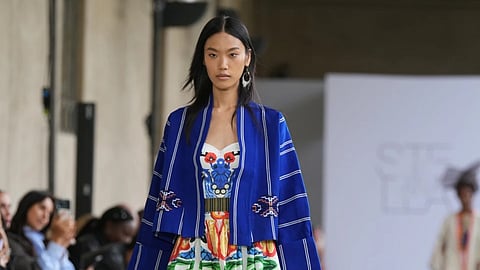
The collection reflected a thoughtful exchange between Jean’s contemporary vision and Bhutan’s textile traditions. Among the standout looks were traditional handwoven tego jackets layered over silk printed dresses, embroidered skirts crafted from nettle fibre, and beaded panels depicting village scenes. Jean herself walked the runway in a kira, a traditional ankle-length Bhutanese dress, symbolising her commitment to collaborative storytelling through fashion.
In a touching gesture, her front row featured the very artisans she had worked with—dressed in their national attire—rather than celebrities or influencers. It was a deliberate inversion of fashion hierarchy, placing craft and community at the centre of the conversation.
Jean’s return to Milan also carried a personal note of gratitude. She first debuted in 2013 at the Armani Theatre, an invitation extended by the late Giorgio Armani, whose mentorship she credits as pivotal in her journey. During the finale, she held up a T-shirt from that debut that read, “Grazie, Mr Armani,” signed simply, “Stella.”
“We cannot be here without paying tribute,” she said. “Italian fashion became the most important in the world thanks to this gentleman.”
With her return, Stella Jean reaffirmed that fashion can be both beautiful and meaningful—a platform not only for style, but for safeguarding the traditions that give it life.
For more updates, join/follow our WhatsApp, Telegram and YouTube channels.