
- LIFESTYLE
- FASHION
- FOOD
- ENTERTAINMENT
- EVENTS
- CULTURE
- VIDEOS
- WEB STORIES
- SPORTS
- GADGETS
- CAR & BIKE
- TRAVEL
- SOCIETY
- GALLERIES
- NORTH EAST
- INDULGE CONNECT
Six months into his tenure at Chanel, Matthieu Blazy made it clear that his work at the historic fashion house is still in progress.
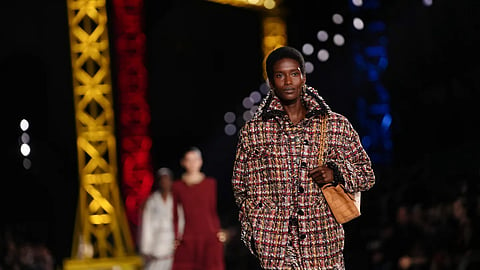
Presenting his second ready-to-wear collection during Paris Fashion Week, the designer staged a show that leaned heavily into the idea of construction — both literal and symbolic. Brightly coloured cranes rose from a holographic floor inside the Grand Palais, suggesting that the house’s next chapter is still being assembled.
For many Parisians, the imagery echoed the cranes that have hovered over Notre-Dame cathedral during its long restoration, though the fashion show aimed for a more dreamlike interpretation of rebuilding.
The audience suggested strong interest in the direction Blazy is taking. Actors, musicians and cultural figures including Margot Robbie, Oprah Winfrey, Jennie, Kylie Minogue, Lily-Rose Depp, Teyana Taylor and Olivia Dean attended the show to watch the designer’s latest exploration of Chanel’s codes.
Blazy structured the collection around a quote from Gabrielle “Coco” Chanel: “We need dresses that crawl and dresses that fly.”
The line became the conceptual anchor of the show, shaping a collection that balanced restraint with theatrical flourish. In contrast to the more expansive debut he presented last October, this outing appeared more controlled and deliberate.
The opening looks were intentionally austere. Black knit zip-up jackets, tweed blousons and boxy overshirts appeared with minimal embellishment, often marked only by Chanel’s signature gold buttons. In the cavernous runway space, the pieces seemed almost understated.
But the simplicity was deliberate. Blazy framed the classic suit as the foundation of the house — the “first brick”, as he described it — from which more elaborate ideas could grow.

The concept aligns closely with Chanel’s own approach. In the designer’s Paris apartment on Rue Cambon, one wall is famously covered in gauze painted gold — a reminder of her fascination with transforming humble materials into something luxurious.
Blazy’s reinterpretation follows that spirit. Familiar Chanel elements were stripped down and rebuilt, appearing as knit shirt jackets, pressed tweed blousons and garments crafted in experimental materials such as silicone-woven fabric and metallic mesh.
The most striking shift in the collection appeared in its silhouette.
Blazy lowered waistlines dramatically, with belts slung towards the mid-thigh and pleated skirts beginning where blazers ended. The effect referenced the drop-waisted styles of the 1920s, but interpreted through a contemporary lens.
Twinsets with elongated proportions, patchwork dresses embroidered with florals and vividly patterned knits carried hints of flapper-era dressing while remaining distinctly modern.
Some pieces pushed the visual experimentation further. A furry coat in bold geometric colours, for instance, evoked the eclectic style associated with London’s Camden district.
Whether such extreme proportions will appeal to Chanel’s long-standing clientele remains an open question. Introducing a radically altered silhouette to loyal customers can be more challenging than attracting critical attention.
If the early portion of the show leaned towards restraint, the final sequence delivered spectacle.
Sequined plaid suits appeared in saturated colours, while beaded coats shimmered with star-chart embroidery. Metallic mesh fabrics were woven to resemble tweed motifs, blending Chanel’s traditional materials with more experimental techniques.
Some models wore pastel-tinted hair that echoed the colours of their garments. Fabric flowers erupted from bodices, and trailing ribbons and layered ruffles added movement to the runway.
Blazy also broadened the casting, featuring models ranging from teenagers to women in their fifties. The extended runway route allowed each look time to settle, with models taking several minutes to complete a circuit.
The collection closed with seven pared-back looks in black and cream, returning the focus to the house’s enduring visual language.
The message was subtle but clear: even as Blazy experiments with new proportions, colours and materials, the core identity of Chanel remains firmly in place.
If this second presentation is any indication, the designer is gradually constructing a balance between reverence and reinvention — a difficult task for any creative lead at a heritage fashion house.
For more updates, join/follow our WhatsApp, Telegram and YouTube channels