
- LIFESTYLE
- FASHION
- FOOD
- ENTERTAINMENT
- EVENTS
- CULTURE
- VIDEOS
- WEB STORIES
- GALLERIES
- GADGETS
- CAR & BIKE
- SOCIETY
- TRAVEL
- NORTH EAST
- INDULGE CONNECT
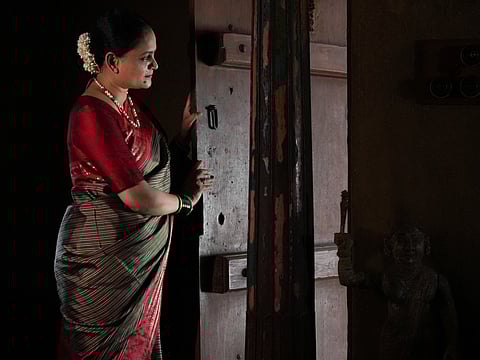
The forgotten textile traditions of the Deccan find new life in Chennai through Dakkhan Ko Chira, a showcase by textile enthusiast Vinay Narkar. Presented at Amethyst, the exhibition brings together sarees, Maratha miniature paintings and design inspirations drawn from jewellery and architecture, celebrating centuries of craft heritage with a contemporary lens.
Why did you decide to put up Dakkhan Ko Chira showcase?
The saris showcased in this exhibition represent the very identity of the Western Deccan region, worn by both the elite and the common people. This distinct identity is unfortunately fading over time. To raise awareness about their origins and heritage, it is essential to restore and reintroduce these specific cultural artefacts.

Can you take us through your journey of being a corporate lawyer to switching to a textile enthusiast?
I was working in Mumbai as a Corporate Lawyer and used to visit my native place, Solapur, on weekends. My wife and I were very fond of textiles, so I asked a local weaver in Solapur to create a sari for her. The sari was very well-received; soon, my relatives and friends began placing orders with me. As the orders increased, so did the frequency of my visits to Solapur.
The turning point came during an International Film Festival in Solapur, where I was asked to design a shawl for the dignitaries. The chief guest was the Oscar award-winning costume designer Bhanu Athaiya. She was presented with the shawl, liked it immensely, and subsequently placed a sizeable order with me. She was insistent that I should take designing seriously and pursue it as a full-time designer. After the successful exhibition of my first collection in Mumbai, I resigned from my job the following month and relocated to Solapur.
Did your background as a lawyer influence your approach to textile revival and the meticulous process of uncovering lost weaves?
My education at National Law School and the rigorous research training I received there played a vital role in my textile research, particularly in the work for my book, Vastragatha (a book about the textile traditions of Maharashtra and the Western Deccan region, written in Marathi)
You are dedicated to the Western Deccan region. What is it about this specific area (Maharashtra, North Karnataka, Telangana, Madhya Pradesh) that captured your interest over other textile traditions in India?
This region has got a distinct textile tradition and this defined the visual identity of the region. I belong here and this is also my expression. The simplicity of the weaves and designs in this region fascinates me. This simplicity is achieved and not a result of lack of resources.
The collection features both "known" and "discovered" weaves. Could you share the story of one weave in the collection that you had to recreate from an original piece?
I found the word ‘Joth’ in a traditional Marathi song. The followed the pursuit and the tradition of Joth saris came into light. The Joth saris has a distinct feature of Ikat stripe in the border. To get that Ikat stripe and weave the sari in my region was a huge task. We got that done through the collaboration of Pochampally dyers and Gadwal weavers.
Beyond saris, the show touches upon jewellery and architecture. How do these elements in the exhibition help place the textiles in their original cultural and historical context?
When I work on textiles, I think about the textile culture in its entirety. I got many references of old textiles through the long poetry traditions of Maharashtra. Similarly looked through different artistic traditions as well. The Maratha paintings traditions didn’t reach to the heights where textile details were shown in them. So for research it was not very useful. Then I thought of reviving the Maratha Styled paintings where saris were depicted very prominently. That way we started showing the collection of our Maratha Styled paintings as well.
The painting depicts the textiles, architectural details, traditional jewellery, objects and the cultural history as well. Like the Textiles of the region, the architecture also has distinct forms. So we thought of making exclusive jewellery pieces dedicated to these architectural forms.
What do you hope the viewers will take away from this showcase?
A piece of Deccan Culture..!
After a decade of research, what is the biggest misconception you think people have about the textile heritage of the Deccan region?
Paithani is the most popular sari of the region.. is the biggest misconception..
What is the next step for this research? Do you plan to expand the revival to include other garments or items beyond saris, or will you continue to focus on discovering more of the Deccan's lost weaves?
We’re looking beyond just saris and exploring stitched garments too. (We’ve recently launched Parkar Polka — Maharashtra’s counterpart to the chaniya choli.) We’re also working on developing more themes inspired by Maratha-style paintings and sculptures as part of this revival.
Dakkhan Ko Chira is on till October 15 at The Folly at Amethyst, Chennai
For more updates, join/follow our WhatsApp, Telegram and YouTube channels.