
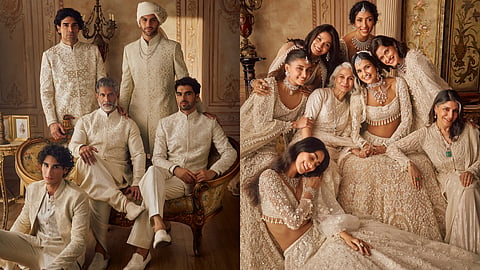
Seema Gujral's latest couture wedding collection is an inclusive and understated family edit

Seema Gujral’s latest couture collection, Family Portraits, pays a tribute to everyone who gathers for the rituals of a wedding. In shades of ivory, pearl, and champagne, the collection exudes elegance of diamonds and pearls through delicate thread work, fluid silhouettes, and tonal craftsmanship. “A wedding is not only about the bride. It is about every person who comes together to bless, to celebrate, to carry tradition forward. Family Portraits is our way of honouring the entire circle, mothers, fathers, siblings, in-laws, grandparents, friends, all of whom make the day truly meaningful,” says Seema. As part of this edit, Seema introduces two exquisite bridal accessories: the Pearl Kalira and the Pearl Chaadar. The kaleera replaces classic gold with cascading strands of pearls, while the Pearl Chaadar reimagines the iconic phoolon ki chaadar with intricate pearl embroidery. Seema takes us through the range.
Seema Gujral unveils Family Portraits couture wedding collection
What was the idea behind Family Portraits?
Family Portraits came from a personal place for me. Over the years, I’ve realised that while the bride is at the heart of every wedding, the magic truly comes from the entire circle of people who gather around her. I’ve watched mothers quietly fussing over the tiniest details, fathers holding back tears, siblings bringing their laughter and chaos, in-laws offering their warmth, grandparents blessing with stories from another time, and friends making everything more joyful. I wanted to create a couture story that wasn’t just about the bride standing alone; it’s about these relationships, these shared emotions, and this collective love. It’s my tribute to everyone who gathers, gives, and grows through the rituals of a wedding.
Why did you choose ivory and champagne colours?
I’ve always been drawn to colours that feel timeless, and for me, ivory and champagne will never lose their charm. They have a quiet strength, soft, luminous, and full of grace. These shades remind me of heirlooms like pearls, diamonds, or delicate lace, treasures that are lovingly passed down through generations. They don’t scream for attention, but they leave a lasting impression. To me, they feel like the warm glow of a memory, subtle yet unforgettable, which made them the perfect choice to capture the intimacy and elegance of Family Portraits.
How did you come upon the idea of pearl kaleeras and chadaar?
I’ve always been fascinated by our wedding traditions and how they hold so much symbolism. But I also love finding ways to reinterpret them for today’s bride. The Pearl Kalira idea came because I wanted something softer than the usual gold a cascade of pearls that almost feels like blessings gently falling into the bride’s hands. It’s delicate, romantic, and ethereal. For the Pearl Chaadar, I imagined it as a veil of love and protection, something that would shimmer with every step the bride takes. Instead of flowers, I used intricate pearl embroidery so it feels heirloom-worthy, something that could even be preserved and passed down. Both pieces keep the sentiment of tradition but bring a gentler, dreamier elegance to it.
What’s working in the bridal and wedding scene this season?
I think the biggest shift is that brides are making choices based on how they feel in an outfit, not just how it looks. They’re gravitating towards pieces that are lighter, more comfortable, and more personal. Softer palettes, easy-to-wear lehengas, and ensembles that can be styled again in a new way are in high demand. Brides want their wedding outfits to tell their own story, not just follow a trend. And comfort has become non-negotiable; nobody wants to feel weighed down on what should be one of the happiest days of their life.
What are the bridal wardrobe must-haves?
A timeless statement piece for the big day, thoughtful accessories, whether rooted in tradition or reimagined in a modern way, and above all, at least one ensemble should feel deeply personal, reflecting the bride’s own style and story.
How much has your brand changed and evolved in these 30 years?
The journey has been nothing short of extraordinary. I started with just three people in my team, and today, I’m fortunate to work with incredibly skilled artisans. My design language has become more refined, and I’ve explored more nuanced ways of blending tradition with modernity. But honouring Indian craftsmanship has never changed. We’ve expanded across the globe, but every single piece is still rooted in the values and artistry we began with.
How have you seen wedding fashion change in these three decades?
When I first started, wedding fashion was set in its ways, traditional colours, classic silhouettes, and a clear idea of what a bride “should” wear. Over the years, I’ve watched that change completely. Brides today are open to experimenting, choosing softer palettes, mixing heritage pieces with contemporary ones, and wearing silhouettes that were once considered unconventional. The emphasis has shifted from simply following tradition to creating a personal expression. Weddings have become more intimate in meaning, even when they’re grand in scale.