
- LIFESTYLE
- FASHION
- FOOD
- ENTERTAINMENT
- EVENTS
- CULTURE
- VIDEOS
- WEB STORIES
- SPORTS
- GADGETS
- CAR & BIKE
- TRAVEL
- SOCIETY
- GALLERIES
- NORTH EAST
- INDULGE CONNECT

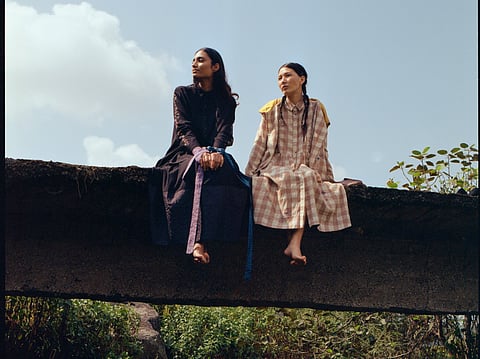
Fashion in India has always been closely tied to culture and everyday life. Indian textiles were created to serve real functions, whether as dowry pieces, offerings to deities, or garments for specific climates. Over time, lifestyles have changed, but the emotional value of fashion remains strong. The challenge today is to make heritage relevant again. This idea lies at the heart of Eka’s latest collection, Chamba.
For Rina Singh, founder and designer, fashion begins much before silhouettes. It starts with textiles. “At Eka, each season starts with developing textiles way in advance, that’s where the inspiration comes from,” she says.
The foundation of the collection was laid with an antique Chamba rumal that Rina found through a textile trader in Ahmedabad. Traditionally made in Himachal Pradesh, Chamba rumals are known for their fine embroidery and storytelling. What drew her in was not the finished beauty of the piece, but its imperfections. “I loved the amateur quality,” she explains. “You could see the drawings, the handwriting, and parts where the embroidery wasn’t complete.” While Chamba rumals often depict mythological stories and were used as dowry or religious offerings, Rina did not want to carry those narratives forward literally. “In fashion, we don’t take the complete cultural narrative,” she says. “I didn’t want to replicate the rumal. I only picked up the motif language — the flowers, the small elements — and spread them across the edit.”
This approach allowed the collection to feel light and modern while still being culturally authentic. The motifs appear across garments, sometimes embroidered, woven, and at other times, simply suggested through texture. The storytelling moves away from mythology and towards everyday life.
Fabric choice played an important role. Chamba is an autumn-winter collection, but Rina designed it for the Indian context. “Here, seasons don’t work in straight lines,” she says, adding, “You move from summer to monsoon, then into festive, which becomes part of pre-fall and winter.” Because of this, the edit includes organza, silks, merino wool, handwoven pashmina, and wool jacquards. There are delicate dresses alongside wool jackets, making the pieces easy to layer and wear across seasons.
Rina imagines the collection on a young woman from the mountains today. “She’s not participating in dowry anymore,” Rina says. “Her mother isn’t embroidering a rumal for her. But she’s still carrying that culture with her — maybe through a jacket instead of a textile hanging on a wall.”
This idea reflects the brand’s larger design philosophy. Rina does not create traditional Indian silhouettes or garments meant only for special occasions. “I don’t want to make art pieces that people can’t wear,” she says. “Eka is for everyday life. I want people to build their own life stories with these clothes.”
The making of Chamba involved work across different regions. Wool jacquards were woven in Amritsar, silks in Varanasi, and much of the embroidery was eventually done in-house due to logistical challenges. “Working with artisans and textiles from different places is always difficult,” Rina says. “But that process is what gives the collection its depth.”
The edit begins and ends with white, creating a sense of balance. The finale piece is a layered silk garment with wool padding, embroidered with Chamba motifs and finished with accents of red. “That piece brought everything together,” Rina shares. “It felt modern, Indian, and very emotional.”
At its core, Chamba is about keeping craft alive by making it wearable. “People would proudly wear these textiles if they fit into their lives today,” Rina says. “Whether they are in India or living abroad, they should be able to carry their culture lightly and confidently.”
Prices start at Rs 10,000.
Available online.
Email: anshula.u@newindianexpress.com
X: @indulgexpress
For more updates, join/follow our WhatsApp, Telegram and YouTube channels.