
- LIFESTYLE
- FASHION
- FOOD
- ENTERTAINMENT
- EVENTS
- CULTURE
- VIDEOS
- WEB STORIES
- SPORTS
- GADGETS
- CAR & BIKE
- TRAVEL
- SOCIETY
- GALLERIES
- NORTH EAST
- INDULGE CONNECT

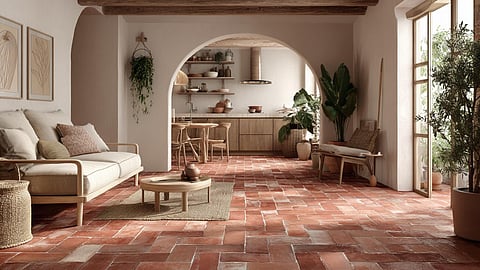
For decades, Mediterranean interiors have remained a perennial source of inspiration, conjuring images of whitewashed villas perched on sun-drenched cliffs, terracotta roofs, olive groves and breezy courtyards overlooking the sea. But today, the appeal of this design language extends far beyond holiday homes and Pinterest mood boards.
Its resurgence comes at a time when homeowners are looking inward. Instead of trend-led decorating and picture-perfect spaces, the focus has shifted towards homes that feel restorative, lived-in and deeply personal.
More than a coastal aesthetic
Mediterranean design is no longer about recreating a Greek island villa. Instead, designers say its appeal lies in the lifestyle it represents. “I think the appeal goes far beyond aesthetics,” says Surabhi Somani, co-founder of Studio Baariki. “After years of fast-paced living and digitally driven lifestyles, people are gravitating towards homes that feel calm, grounded and deeply connected to nature. Mediterranean design celebrates natural light, organic textures, craftsmanship and an effortless indoor-outdoor lifestyle.”
For Gaurav Jain, creative director and founder of Orange Tree, the trend reflects an emotional shift in how people want to live. “Today’s homeowners are looking for spaces that feel restorative and emotionally comforting rather than simply decorative,” he says. “The Mediterranean aesthetic resonates because it celebrates natural light, organic forms, tactile materials and a seamless connection to nature.”
The new Mediterranean
The modern Mediterranean home is far more understated than its predecessors. “The renewed fascination with Mediterranean interiors reflects a broader lifestyle shift towards authenticity, craftsmanship and wellness,” says Romit Savla, founder and principal designer of Soch Design Studio. “The emphasis today is less on coastal motifs and more on creating an atmosphere that feels relaxed and timeless.”
Rather than relying on blue-and-white colour palettes or nautical accessories, Romit says contemporary interpretations focus on sculptural furniture, handcrafted details and layered natural textures. “We avoid literal interpretations like excessive blue-and-white palettes or overt resort styling. Instead, we layer handcrafted furniture, sculptural forms and organic textures that quietly reference the Mediterranean while remaining rooted in modern Indian living.”
Less is more
One of the biggest misconceptions, according to Monica Chawla, co-founder and creative director of Essentia Environments, is that Mediterranean design is about adding more visual cues. “The mistake most people make is treating it as a costume rather than a mood,” she says. “Adding an arch here, a terracotta pot there and calling it done tends to look like a hotel lobby rather than a home.” Instead, she recommends restraint.
“Choose two or three defining elements—a lime-washed wall, natural linen or a stone floor—and let the rest of the room stay quiet. Mediterranean interiors work because of what they leave out, not what they add.”
Materials that matter
Much of the style’s character comes from its material palette. Travertine, textured stone, limewash, terracotta, oak, cane and linen create warmth without overwhelming a space. Romit says these materials also work particularly well in India’s climate.
“We frequently use travertine, textured stone, limewash finishes, oak, cane, linen and handcrafted wood furniture, complemented by warm neutrals, terracotta, muted greens and sandy hues. In tropical climate, these materials age beautifully while creating interiors that feel cool and breathable.”
Designed for Indian homes
While the inspiration may come from Southern Europe, designers are careful to adapt the aesthetic to Indian conditions. “Mediterranean design should never be replicated literally,” says Aayush Arya, owner and principal designer of 6Hues Architecture Studio. “Instead of copying whitewashed villas, we reinterpret its principles through breathable materials, shaded transitions, textured lime plasters and layouts that encourage cross ventilation.” Monica agrees.
“Traditional Mediterranean homes rely on thick stone walls to stay cool, which we don’t always have here. We recreate the same warmth and visual weight using finishes better suited to Indian heat and monsoon conditions.”
A slower way of living
Perhaps what truly makes Mediterranean interiors timeless is that they celebrate everyday rituals rather than grand gestures. “There is a growing appreciation for homes that evoke a sense of calm, warmth and effortless elegance,” says Anannya Sabarwal of Le Creuset India. “People are creating spaces that feel inviting and thoughtfully curated, where shared meals and meaningful moments take centre stage,” she adds.
—manuvipin@newindianexpress.com
@ManuVipin
For more updates, join/follow our
https://www.whatsapp.com/channel/0029Vb677uz60eBXiDYheb0n