
- LIFESTYLE
- FASHION
- FOOD
- ENTERTAINMENT
- EVENTS
- CULTURE
- VIDEOS
- WEB STORIES
- SPORTS
- GADGETS
- CAR & BIKE
- TRAVEL
- SOCIETY
- GALLERIES
- NORTH EAST
- INDULGE CONNECT

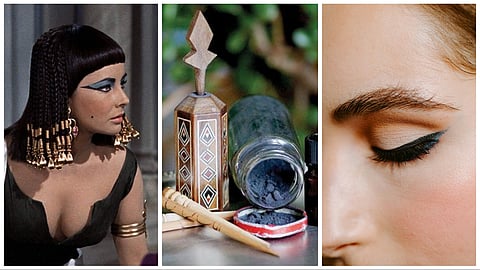
The ancient Egyptian kohl used by pharaohs, common folk, and gods such as Horus and Ra is known worldwide for its beauty-enhancing use. But it served another purpose too: it helped reduce eye glare, keep insects at bay, and possibly fight bacteria.
Eye diseases in ancient Egypt were frequent. The sandy surroundings exposed people to excessive light, dust, and sand. In addition, annual floods from the Nile created conditions in which bacteria could infect the eyes.
Ancient Egyptian kohl was a ritual carried out on a daily basis around the eyes. The paste would prevent dust and dirt from getting into the delicate eyes. It would also give a cooling effect to protect against the harsh climate and keep away flies that cause diseases.
A cosmetic with antibacterial power
Ancient Egyptian kohl had medicinal properties because of the ingredients used in it. Galena was the chief ingredient in kohl, which is a dark-coloured mineral composed of lead sulfide (PbS). Recent studies have shown that some samples of ancient kohl may contain ingredients that induce immunity against bacterial infection.
The kohl used to include other components in addition to antimony powder, including powdered pearls, rare gems, leaves of silver and gold, frankincense, coral, saffron, fennel, neem, and many more. These components could be combined with other substances like oil, gum, fat of animals, milk, or even water.
Ancient Egyptian kohl was worn by everyone regardless of their economic standing, but better quality Kohl was a sign of prosperity. Some people who could not afford the product used ashes obtained from it. The significance of the eye make-up was not only present in life but also persisted into death. Containers of kohl together with the tools used to apply kohl were placed within gravesites.
The use of kohl was not restricted to Egypt alone. Traces of this cosmetic have been detected in North Africa, Central Asia, the Mediterranean, and East Asia. Some of the nomenclature for the kohl of ancient Egypt also inspired names in various places, such as kohl in Arabic civilization, kollurion in Greek-Roman civilization, and surma in Iran and Indo-Pakistan civilization.
For more updates, join/follow our WhatsApp, Telegram and YouTube channels.