
- LIFESTYLE
- FASHION
- FOOD
- ENTERTAINMENT
- EVENTS
- CULTURE
- VIDEOS
- WEB STORIES
- SPORTS
- GADGETS
- CAR & BIKE
- TRAVEL
- SOCIETY
- GALLERIES
- NORTH EAST
- INDULGE CONNECT

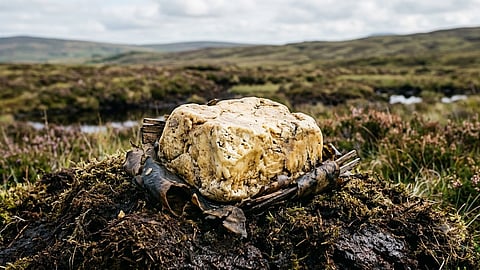
Bog butter is an ancient food that has been recovered from underground peat bogs in Ireland and Scotland. These yellowish, wax-like chunks of butter or animal fats have remained preserved for hundreds to thousands of years because peat bogs provided ideal preservation conditions.
Bog butter was placed very deep into the peat bogs, which had cold conditions, acidic water, and little oxygen that slowed decomposition. People used wooden jars to hold the butter, and sometimes even encased the butter in animal skins or wrapped it with bark.
There are many theories behind why researchers think people used bog butter. One theory is that it was an ingenious method of preserving fats at a time when there were no refrigerators. Another theory is that some people stored bog butter in order to prevent theft of their food during tumultuous times.
In contrast to modern butter, bog butter has an appearance that is far from looking fresh or creamy. After being buried for centuries underground, it tends to be whitish, compact, and waxy. Scientists have found that it include animal fats, which have been well-preserved. The taste of the samples analyzed has been described as being strong, earthy, cheesy, and a bit smoky. The scientists have compared the taste to that of aged cheese with strange underground smells.
While a few scholars have tasted or even analysed some historical samples, bog butter is generally not viewed as edible. It is possible that many thousands of years of storage have not protected it from bacteria, fungi, and toxins.
Bog Butter’s concept has been replicated by modern-day chefs with the help of contemporary food items. In order to emulate the taste of bog butter, chefs utilise items such as caramelised butter, smoked salt, porcini mushrooms’ powder, blue cheese, herbs, vinegar, and other spices.
For more updates, join/follow our WhatsApp, Telegram and YouTube channels.