
- LIFESTYLE
- FASHION
- FOOD
- ENTERTAINMENT
- EVENTS
- CULTURE
- VIDEOS
- WEB STORIES
- SPORTS
- GADGETS
- CAR & BIKE
- TRAVEL
- SOCIETY
- GALLERIES
- NORTH EAST
- INDULGE CONNECT

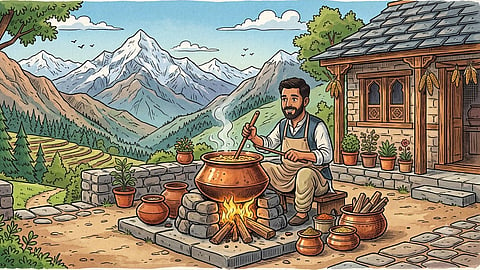
At around four in the morning, as Pathiar remains asleep, a makeshift kitchen comes up in the light from the diesel lamp. A bamboo structure, steel sheeting and soil make the rasialu, the cooking area, which might vanish once the party ends. In it, Boti cooks start a ritual which has been the same for ages: making the fire trench, placing pinewood and making the Himachali Dham.
It is not the cooking that comes first but the creation of the char. It is a six-foot-long and two-foot-wide trench that contains pinewood and sometimes deodar. Once the fire has settled, the brass charoti pots are put on top of it. Before putting the first lentil, the cook touches the spot where he will cook with his forehead.
Dham is the traditional communal vegetarian dish of Himachal Pradesh. This dish is prepared during wedding ceremonies, thread ceremonies, death feasts, and temple festivals. It is estimated that the practice of preparing Dham is about 1,000 years old and is associated with the king named Jaisthambh.
The Boti cooks are from Brahmin families who have preserved these techniques through oral tradition. These recipes are not present in any book form. The fathers of the families train their sons by observation and practice. The origin of this custom was that the food of the temples was supposed to be sacred prasad and thus should be prepared only by Brahmins.
Later on, kings from Chamba and Mandi also engaged these chefs for their royal events, marriages, and other ceremonies. Various styles of Dham emerged depending on their region of origin, such as Kangra, Kullu, Bilaspur, Sirmaur, and Shimla.
The cookware is still an essential part of this tradition. Charoti or batloi/baltohi is the name of the brass cookware with a wide body and small neck. It makes it easy to retain steam inside and thus to keep the food warm for hours. This makes it an excellent tool for a community feast, where hundreds of people are fed from noon to 4 PM.
One of the most unique methods is that of dhuni. A red-hot coal is coated with hot mustard oil, immersed in dal and kept covered for 90 seconds. The smoke imparts an intense scent of mustard which is not possible to produce artificially. The boti cooks use several methods, which include the walnut method. In this method, the black walnuts are crushed and then added to some dishes for flavour and colour.
For more updates, join/follow our WhatsApp, Telegram and YouTube channels.