
- LIFESTYLE
- FASHION
- FOOD
- ENTERTAINMENT
- EVENTS
- CULTURE
- VIDEOS
- WEB STORIES
- SPORTS
- GADGETS
- CAR & BIKE
- TRAVEL
- SOCIETY
- GALLERIES
- NORTH EAST
- INDULGE CONNECT

In Tibet, tea is traditionally prepared with butter and salt rather than served as a plain infusion. Known as po cha, or butter tea, the drink is made by combining brewed tea with butter, traditionally from yak milk, and salt. Its place in Tibetan food culture offers a glimpse into the history of a trading network that carried tea across some of China's most difficult mountain terrain.
Across the mountains on China's Tea Horse Road
Known as the Cha Ma Gu Dao in Chinese, the Ancient Tea Horse Road was a network of trade routes connecting the tea-producing regions of Yunnan and Sichuan with Tibet and neighbouring areas. It was not a single continuous road, but a series of interconnected pathways used by merchants, traders and transporters. The network developed over several centuries, with tea becoming an increasingly important commodity in exchanges involving horses and other goods.
Trade across these southwestern borderlands existed before the organised tea-horse exchanges became prominent. The route's development is associated with the Tang and Song periods, while the trade became particularly important during the Ming and Qing dynasties. Chinese authorities recognised the strategic value of horses for military purposes and developed administrative systems to regulate aspects of the exchange.
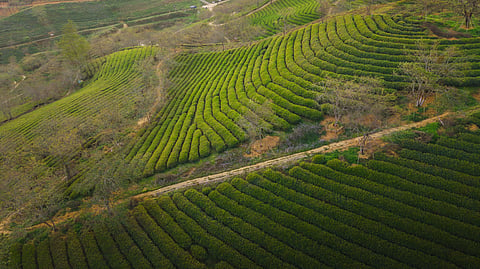
Sichuan was a particularly important source of tea destined for Tibet. The region around Ya'an produced compressed tea that could be transported more easily across long distances. In Yunnan, areas associated with Pu'er tea also developed significant trading connections. Tea was processed into cakes and bricks, making it easier for pack animals to carry the commodity through mountain passes.
The exchange involved more than tea and horses. Salt, grain, textiles, medicinal products and other goods moved along different sections of the network. Communities in the highlands exchanged pastoral products for agricultural supplies, while trading towns developed into important centres for merchants and transporters.
Tea's significance in Tibet was closely connected to the region's food economy. Pastoral communities relied heavily on dairy products, meat and other foods associated with livestock rearing. Butter tea became an established part of everyday life, offering a substantial drink that could be consumed alongside meals or served to visitors.
The preparation of butter tea involves brewing tea and combining it with butter and salt. Traditionally, the mixture was churned in a cylindrical wooden container until the ingredients blended. The result is a rich, savoury drink that differs considerably from the lighter tea preparations associated with many other parts of Asia.
Tea was also consumed in other forms across the trading regions. Compressed tea was particularly useful in communities where supplies had to travel over long distances. Its durability made it a valuable commodity, while the standardised blocks were convenient for transport and exchange.
The trade network also connected religious institutions and commercial centres. Buddhist monasteries were important economic and cultural institutions in Tibetan regions, and some participated in the movement of commodities. Merchants and intermediaries played a significant role in facilitating transactions between Chinese tea producers and Tibetan buyers.
Dartsedo, known today as Kangding in Sichuan, became an important trading centre. It connected tea merchants with Tibetan traders and transporters. The town's position along the routes made it a key point for the exchange of goods moving between the agricultural regions of Sichuan and the Tibetan Plateau.
The system was also influenced by government policy. During the Ming dynasty, tea-horse administrative offices were established to manage trade and the acquisition of horses. The exchange was therefore both a commercial activity and a political instrument. Tea could be used within diplomatic and economic relationships between Chinese administrations and neighbouring communities.
The route's difficult geography required considerable local knowledge. Merchants had to negotiate steep mountain passes, rivers and changing weather conditions. Inns, market towns and intermediary trading communities provided essential support along the way. The movement of goods depended on networks of people who understood the terrain and maintained relationships between distant settlements.
Modern roads and transport systems gradually reduced the importance of the historic pathways. Nevertheless, the route remains an important part of the history of southwestern China. Its legacy can be traced through the tea cultures of Yunnan and Sichuan, as well as the continued importance of butter tea in Tibet.
The Ancient Tea Horse Road demonstrates how a commodity can shape relationships between very different landscapes and economies. Tea travelled from cultivated mountain regions into pastoral communities, where it acquired new uses and meanings. Its history remains visible in the way it is prepared and consumed across the regions once connected by the trading network.
For more updates, join/follow our WhatsApp, Telegram and YouTube channels