
- LIFESTYLE
- FASHION
- FOOD
- ENTERTAINMENT
- EVENTS
- CULTURE
- VIDEOS
- WEB STORIES
- SPORTS
- GADGETS
- CAR & BIKE
- TRAVEL
- SOCIETY
- GALLERIES
- NORTH EAST
- INDULGE CONNECT

A Korean household's pantry can contain ingredients that have been fermenting for months, sometimes years. Soybean paste, soy sauce and chilli paste are allowed to mature under carefully maintained conditions, developing flavours that become part of everyday cooking. These preparations belong to a broader tradition known as jang, which encompasses Korea's fermented sauces and pastes. Their production is closely connected to household knowledge, seasonal changes and the country's long history of food preservation.
The flavours that fermentation built
Fermentation developed partly as a practical response to the need to preserve ingredients. Korea's winters, particularly in its northern and mountainous regions, made the storage of vegetables and other foods an important domestic concern. Fermenting vegetables and soybeans allowed households to maintain supplies beyond their growing seasons.
One of the most important fermented foods is kimchi. Although napa cabbage kimchi is internationally recognised, the category includes numerous preparations made with different vegetables. Radish, cucumber, mustard greens and other seasonal produce are used, with recipes varying between regions and households. Ingredients may include chilli powder, garlic, ginger, spring onions and salted seafood.
The use of salted seafood, including shrimp and anchovies, contributes to the flavour of many kimchi varieties. However, not every preparation contains seafood. Vegetarian and regional versions use different combinations of ingredients, reflecting local preferences and dietary practices.
The seasonal preparation of kimchi is associated with kimjang, the collective tradition of making and sharing large quantities of kimchi before winter. Traditionally, households planned the process around the availability of vegetables, salt and other ingredients. Families and neighbours gathered to wash and season cabbage, prepare the mixtures and store the finished kimchi.
UNESCO inscribed kimjang on its Representative List of Intangible Cultural Heritage in 2013. Its recognition focuses on the annual cycle of preparation and the exchange of kimchi between households. The practice also reflects the importance of sharing labour and food within communities.
Fermented soybean products form another essential part of Korean cooking. The process generally begins with meju, blocks of cooked and crushed soybeans that are shaped and dried. During this stage, naturally occurring microorganisms help initiate fermentation. The blocks are then placed in brine, where further fermentation takes place.
The liquid produced during this process becomes ganjang, or Korean soy sauce, while the fermented soybean solids are matured into doenjang, a thick paste. The preparation of gochujang is different. It combines chilli powder, glutinous rice or other grains, fermented soybean material and salt, producing a paste that develops sweetness and depth during ageing.
These ingredients are used throughout Korean cooking. Doenjang is central to soybean paste stews, while gochujang appears in marinades, dipping sauces and dishes such as bibimbap. Ganjang seasons soups, braised dishes and vegetables.
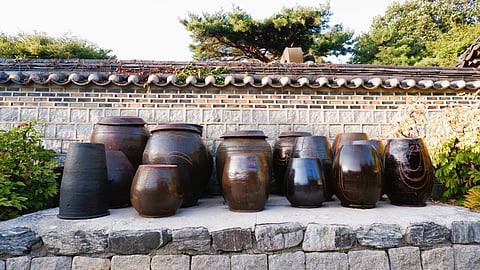
Traditionally, fermented ingredients were stored in onggi, earthenware vessels with porous walls that allow some air circulation while retaining moisture. The jars were often arranged outdoors in areas exposed to sunlight and fresh air. The conditions of storage, including temperature and salt concentration, influence the fermentation process.
Jang-making was inscribed on UNESCO's Intangible Cultural Heritage list in 2024. The recognition covers the knowledge involved in preparing, fermenting, ageing, storing and consuming these products. UNESCO also notes that individual households maintain their own variations, with some families keeping aged soy sauce for decades.
The process has traditionally been transmitted within families, particularly between women across generations. Knowledge about selecting soybeans, preparing meju and maintaining fermentation vessels is often accumulated through repeated practice. Community groups, schools and universities also contribute to safeguarding these traditions.
Modern food production has changed how fermented products are made and purchased. Commercial kimchi and bottled sauces are widely available, and refrigeration has reduced the need for households to preserve vegetables in the quantities once required. Nevertheless, home fermentation remains part of Korean food culture, while specialist producers continue to maintain traditional methods.
The continuing presence of jang and kimchi in everyday meals demonstrates how preservation became a defining culinary practice. Their importance lies partly in their ability to transform ingredients over time, but also in the household knowledge required to make them. A jar of fermented soybean paste carries the results of a process that begins with an agricultural harvest and continues long after the beans have left the field.
For more updates, join/follow our WhatsApp, Telegram and YouTube channels