
- LIFESTYLE
- FASHION
- FOOD
- ENTERTAINMENT
- EVENTS
- CULTURE
- VIDEOS
- WEB STORIES
- SPORTS
- GADGETS
- CAR & BIKE
- TRAVEL
- SOCIETY
- GALLERIES
- NORTH EAST
- INDULGE CONNECT

On Djerba, an island off Tunisia's southeastern coast, the organisation of food production has long been influenced by the availability of water. Its semi-arid climate makes agriculture dependent on careful resource management, and traditional settlements developed around family estates that combined domestic life with farming and craft activities. The island's food culture is closely connected to this way of living, as well as to the commercial networks that brought ingredients and culinary influences from across the Mediterranean.
Exploring the island food heritage of Djerba
Djerba's history reflects successive periods of Amazigh, Arab, Jewish and other cultural influences. Its position along Mediterranean trading routes connected it with North Africa, the Middle East and southern Europe. These exchanges contributed to the island's cultural diversity, although its food traditions also developed through local agricultural practices and household customs.
The island's traditional settlement pattern offers a useful way of understanding this relationship. In 2023, UNESCO recognised Djerba as a World Heritage property for its distinctive settlement system, which developed between the ninth and eighteenth centuries. The pattern emerged partly in response to the island's limited water resources.
At the centre of this system was the menzel, a family estate that combined a dwelling with agricultural and economic activities. Several estates formed a houma, or neighbourhood, which was connected to other settlements, religious sites and commercial centres through a network of roads. These neighbourhoods functioned as relatively self-sustaining units, with farming and craft activities supporting everyday life.
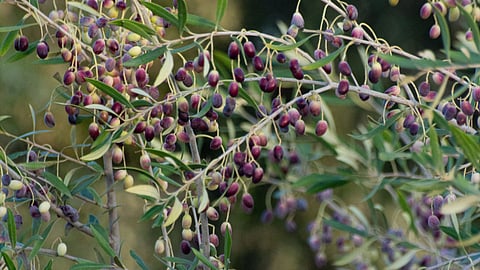
The landscape influenced what could be cultivated. Olive trees have long been important to the island's agricultural economy, while cereals and vegetables formed part of local food production. Livestock rearing and fishing also contributed to the island's food supply. The surrounding sea provided access to fish and seafood, while markets connected producers with goods brought from elsewhere in Tunisia and the Mediterranean.
Couscous occupies an important place in Djerbian cooking. Made from semolina, it belongs to a wider North African food tradition, with regional variations in the way it is prepared and served. Fish couscous is particularly associated with Djerba's coastal setting. It combines steamed semolina with fish, vegetables and a seasoned broth.
The preparation reflects the relationship between the island's agricultural and fishing economies. Wheat provides the semolina, while fish and vegetables contribute to the accompanying sauce. The ingredients and seasoning can differ between households, making individual family preparations an important part of the island's culinary identity.
Another preparation associated with Djerba is rouz jerbi, a rice dish cooked with ingredients such as meat, vegetables, herbs and spices. Unlike rice preparations in which the ingredients are cooked separately, Djerbian versions often involve combining them before steaming or baking. The dish is particularly associated with family meals and gatherings, although recipes vary.
Tunisia's wider food culture also includes brik, a thin pastry filled with ingredients such as egg, tuna, parsley or potato and fried until crisp. It is popular across the country, rather than being exclusive to Djerba. Its presence on the island reflects the relationship between regional cooking and the broader Tunisian culinary tradition.
Djerba's religious diversity has also shaped its food practices. Muslim and Jewish communities have maintained different culinary customs, particularly around religious observances and important family occasions. Food is associated with celebrations, weddings, births and other life-cycle events. The traditions are not identical, and the island's communities have maintained distinct identities despite sharing the same geographical space.
The Ghriba Synagogue, one of North Africa's most significant Jewish religious sites, is an important part of this history. Its annual pilgrimage attracts Jewish visitors from Tunisia and abroad. The surrounding Jewish heritage forms part of Djerba's wider cultural identity and reflects the island's long history of religious coexistence.
Houmt Souk, the island's principal market town, has historically served as a centre for commercial activity. Markets connect agricultural producers, fishermen, traders and consumers, bringing together local ingredients and goods from beyond the island.
Tourism and changing agricultural practices have altered Djerba's relationship with food production. Some traditional farming activities face pressure as land use changes and younger generations move towards other occupations. The island's heritage therefore involves more than the survival of particular recipes. It also depends on the agricultural and settlement systems that supported them.
Djerba's food traditions are best understood through this relationship between landscape and community. Its fish couscous, family rice preparations and ceremonial meals belong to a food culture shaped by an island that has adapted to its environment while remaining connected to the Mediterranean.
For more updates, join/follow our WhatsApp, Telegram and YouTube channels