
- LIFESTYLE
- FASHION
- FOOD
- ENTERTAINMENT
- EVENTS
- CULTURE
- VIDEOS
- WEB STORIES
- SPORTS
- GADGETS
- CAR & BIKE
- TRAVEL
- SOCIETY
- GALLERIES
- NORTH EAST
- INDULGE CONNECT

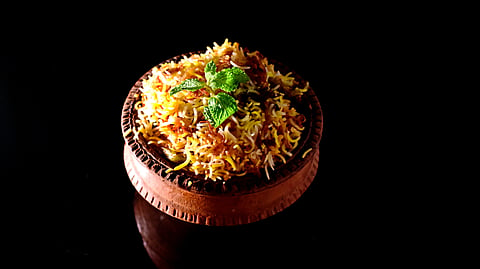
Ask five Chennaiites where to find the city’s best biriyani and you’re likely to get five different answers. That’s because Chennai has never belonged to a single school of biriyani.
Here, Ambur and Dindigul share the spotlight with Chennai Muslim biriyani, while Hyderabadi, Thalassery, Awadhi, and Kolkata styles have all become part of the city’s culinary vocabulary. Add Donne biriyani and newer interpretations to the mix, and the city’s biriyani story becomes one of constant evolution rather than competition. Here’s our guide to the regional styles that have shaped Chennai’s enduring love affair with India’s favourite rice dish.
Chennai Muslim, Dindigul, and Ambur biriyanis may appear similar at first glance, but each tells a different story. “This is the closest thing Chennai has to its own distinct biriyani tradition,” says Corporate Executive Chef Sheetharam Prasad, GRT Hotels & Resorts.
The Chennai Muslim biriyani evolved in the city’s Tamil Muslim households and wedding feasts, particularly in neighbourhoods such as Triplicane, Royapettah, Mannady, and Periamet. Usually made with basmati rice, layered and dum-cooked, it is traditionally served alongside brinjal dalcha and raita. “The city’s Muslim trading communities adapted recipes using local ingredients while drawing influences from Arab, South Indian and Mughal cuisines,” explains Sheetharam.
Then comes Dindigul, perhaps Tamil Nadu’s most instantly recognisable style today. The tang from curd and lemon, balanced by pepper and fennel, gives it a distinctive character. Its popularity exploded in Chennai over the past two decades, largely thanks to chains such as Dindigul Thalappakatti, and Ponram. “The stronger spice balance creates a flavour that’s both spicy and refreshing, while many iconic brands finish with their own secret spice mix to retain the aroma,” he says.
Ambur biriyani, believed to have evolved under the Arcot Nawabs, remains a Chennai favourite despite originating in northern Tamil Nadu. Its enduring popularity owes much to the historic Chennai–Bengaluru highway, where generations of travellers made Ambur an essential food stop. “Ambur is subtle, balanced and meat-forward,” says Sheetharam.
Chef, food anthropologist, and culinary researcher Shri Bala believes geography played as much of a role as flavour. "Ambur, being very close to Chennai, became the city's earliest and strongest biriyani influence. Long before newer styles arrived, it was the closest representation of what many Chennaiites associated with biriyani," she says. Dindigul followed later, offering diners a familiar rice with a noticeably different flavour profile, driven by increasing travel and a growing appetite for regional variation.
Although they share similar ingredients, the differences lie elsewhere. “The proportions, cooking techniques and spice balance make each one unique. Water, meat and the cook’s experience play a major role,” he says.
Where to try: Hotel Kalyana Bhavan, Bilal, Yaa Mohaideen, Dindigul Thalappakatti, Ponram, and Ambur Star Briyani
Tamil Nadu may have perfected its own biriyani traditions, but its neighbours have long found devoted fans in Chennai too.
Donne biriyani from Karnataka has rapidly built a loyal following in the city. Traditionally served in a donne, a bowl made from dried areca leaves, it is known for its vivid green masala, fragrant short-grain rice and lighter, herb-forward profile.
If Donne is vibrant, Thalassery arrives with a softer voice.
Rooted in Kerala’s Moplah community and influenced by centuries of Arab trade along the Malabar coast, it relies on fragrant jeerakasala rice, generous spoonfuls of ghee, fried onions, raisins, and cashews. The rice and meat are usually cooked separately before coming together in careful layers.
“The overall taste is slightly sweet, aromatic and delicate,” says chef Seetharam. “Tamil Nadu biriyanis, in comparison, are usually spicier, tangier and rely more heavily on chilli, pepper, fennel, and meat stock.”
Hyderabadi biriyani, meanwhile, brings the grandeur of the Nizams to the table. Rich marinades, bold spices and the iconic kacchi dum technique have made it one of the country’s most recognisable styles, and one that continues to enjoy immense popularity in Chennai.
Yet, according to Chef Shri Bala, popularity in India does not always translate equally in Chennai. "There are biriyani brands that have come from Hyderabad, but they haven't made the same mark here as Ambur or Dindigul," she says. Kolkata biriyani, too, remains relatively niche in the city. "Many Chennai diners still associate the potato with cost-cutting rather than tradition, even though it is central to Kolkata's own biriyani heritage."
Where to try: Chickpet Donne Biryani House, Nandhana Palace, Paragon, That Mallu Joint, The Old Mirchi Biryani, Abids, SS Biryani, and Paradise
If Tamil Nadu’s biriyanis were shaped by communities, India’s royal biriyanis were shaped by courts.
The Awadhi and Kolkata styles may now sit comfortably on Chennai menus, but each carries the imprint of a kingdom that believed cooking was as much an art as architecture or music.
“Every royal kitchen had its own identity, and that’s reflected in these biriyanis even today,” says executive chef Nikhil Nagpal, ITC Grand Chola. “ Awadhi biriyani is all about finesse, with gentle dum cooking and subtle aromatics. Hyderabadi biriyani reflects the grandeur of the Nizams through richer marinades, bolder spices and deeper flavours. Kolkata biriyani, inspired by the Awadhi style, evolved into a lighter, fragrant version with its iconic potato.”
Technique, they say, is where the magic really happens. “Technique is what separates a good biriyani from an unforgettable one,” says Executive Chef Ravish Mishra, The Leela Palace Chennai. “In kacchi dum, the marinated raw meat cooks together with the rice, allowing the juices and spices to permeate every grain. Pakki dum involves cooking the meat and rice separately before layering them, offering greater consistency and refined control over texture.”
For Chef Nikhil, authenticity begins even before the first bite.
“A biriyani is judged long before the first bite. The aroma when the lagan is opened tells you whether the dum has been respected."
Where to try: ITC Grand Chola and Kolkata Biryani House
For a dish that inspires fierce loyalty, biriyani has proved surprisingly adaptable.
Gilli biriyani has become a social media favourite. Hotel menus now feature quinoa biriyani alongside century-old recipes.
At first glance, it might seem like tradition is giving way to trends. The chefs disagree.
Shri Bala argues that authenticity itself deserves a more flexible definition. "Authentic need not be dogmatic," she says. "Every city has adapted biriyani using ingredients that were locally available and reflected its own geography, economy and culture. Food has always evolved, so authenticity should be fluid rather than fixed."
“As chefs, our responsibility is to preserve tradition while responding to evolving lifestyles,” says Chef Ravish. “Quinoa biriyani was never about replacing the classic. It was about offering guests a healthier alternative without compromising the essence of biriyani.”
He sees the growing popularity of newer formats and modern interpretations as evidence that diners have become more adventurous.
“Today’s diners are far more curious than ever before. They actively seek regional authenticity but are equally open to discovering new formats and flavours.”
Chef Nikhil believes the future belongs to regional identities rather than uniform recipes. “Diners today are seeking authenticity and meaningful food experiences, and I believe regional identities will only become more important. Innovation will always have its place, but it should begin with a deep respect for tradition.”
For Shri Bala, that openness is precisely what makes Chennai's biriyani culture unique. "People shouldn't argue that one biriyani is better than another," she says. "Every region has its own story, its own rice, spices and traditions. Taste them where they belong, appreciate the local identity and then decide what you enjoy." Perhaps that is why, she laughs, "Sunday, Chennai, and biriyani have become synonymous."
Where to try: The Leela Palace Chennai and Taj Coromandel
Email: shivani@newindianexpress.com
X: @ShivaniIllakiya
For more updates, join/follow our WhatsApp, Telegram and YouTube channels