
- LIFESTYLE
- FASHION
- FOOD
- ENTERTAINMENT
- EVENTS
- CULTURE
- VIDEOS
- WEB STORIES
- SPORTS
- GADGETS
- CAR & BIKE
- TRAVEL
- SOCIETY
- GALLERIES
- NORTH EAST
- INDULGE CONNECT

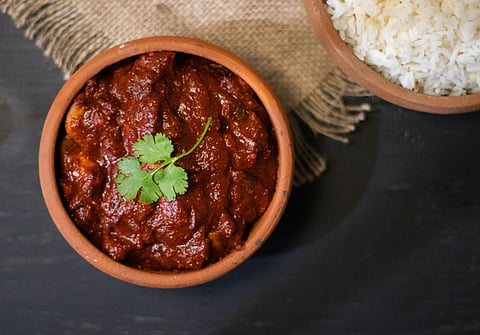
The Goan Vindaloo is well-known for its spicy taste, but there is one misconception about this dish. Many people think that potatoes are a very important part of the dish due to the word 'aloo.' The truth is that Goan vindaloo does not have any potatoes in it. The origin of this dish is from the Portuguese recipe called 'Carne de Vinha d'Alhos,' which means meat with wine and garlic marinade. Over time, the recipe was adapted in Goa using local ingredients, while a linguistic misunderstanding led many restaurants to spike the Indian version with spuds.
The origins of vindaloo can be traced back to when the Portuguese arrived in Goa in the 16th Century. With them, they brought Carne de Vinha d'Alhos, which is the method of marinating meat in wine, vinegar, garlic, thyme, paprika, red pepper paste, and cloves. By using this sour technique of cooking, it was possible to soften the meat without any vegetable ingredients.
The Goan cooks welcomed the recipe but gave it a distinct flavour of their own. They substituted wine with palm vinegar and incorporated indigenous flavours such as Kashmiri chillies to make a spicy and tangy curry known as vindaloo. But it was still all about marinated meat, spices and vinegar.
The derivation of the term 'vindaloo' involves two Portuguese terms. 'Vinha' stands for wine or wine vinegar, and 'alhos' stands for garlic. This misconception arose later on when the British and Indians who ran their curry houses confused the Portuguese word 'alhos' with the Hindi word 'aloo' (potato). That simple misunderstanding helped create the myth that potatoes belonged in the dish.
Potatoes eventually found their way into different restaurant variations of Goan Vindaloo, though not for any reason that had anything to do with the potato being an ingredient in the original dish. The commercial restaurants included potatoes as a way to increase the quantity and reduce costs.
For more updates, join/follow our WhatsApp, Telegram and YouTube channels.