
- LIFESTYLE
- FASHION
- FOOD
- ENTERTAINMENT
- EVENTS
- CULTURE
- VIDEOS
- WEB STORIES
- SPORTS
- GADGETS
- CAR & BIKE
- TRAVEL
- SOCIETY
- GALLERIES
- NORTH EAST
- INDULGE CONNECT
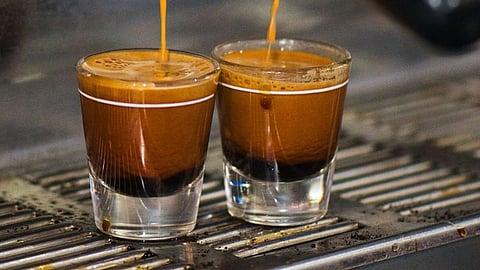
Here’s a piece of advice for all my fellow coffee lovers: The next time you're sipping a shot of espresso and notice that velvety layer of golden-brown foam sitting pretty on top, don’t just admire it; read it. That rich, bubbly cap has a lot more to say than you think. It’s called crema, and for coffee lovers, it’s the espresso’s opening act.

Crema is the tan-to-dark-brown frothy layer that forms on top of a freshly pulled shot of espresso. It’s created when hot, pressurized water emulsifies the oils in coffee grounds, creating a mixture of air bubbles and soluble coffee compounds. Even though it disappears comparatively quickly, its short lifespan can be more than enough to take a dive into our espresso’s soul.
1. Freshness of the beans
If your espresso has a thick, long-lasting crema, chances are your beans are freshly roasted. That's because fresh beans release carbon dioxide; and crema feeds on CO₂ like bees on nectar. Stale beans? Your shot might look flat and lifeless, with a watery surface and barely-there foam.
2. The Roast’s Personality
Crema also hints at the roast profile. Darker roasts tend to produce a darker, thicker crema with a slightly bitter edge, while lighter roasts might yield a thinner, golden crema with brighter flavor notes. It’s like mood rings, but for caffeine: bitter and brooding or light and lively — your crema would know.
3. Your Espresso Machine’s Power
Not all espresso machines are created equal, and crema shows if your gear is up for the job. Proper crema needs about 9 bars of pressure. Without it, you won’t get that delicious emulsification. So, if you’re pulling shots on a basic machine or using a stovetop Moka pot, don’t expect a café-style crema. That being said, too much crema can also be a warning sign — an overly frothy top might mean your machine is running too hot or too fast.
Ever sipped a spoonful of crema before mixing it into the shot? It's intense. Almost too intense. Crema alone can be bitter, even ashy. But when stirred in, it deepens the body of the espresso, adds texture, and makes the shot richer.
But here’s where it gets controversial. Some baristas believe crema is overrated. Why? Because some bad shots — over-extracted, burnt, or poorly brewed — can still have good crema. Looks can be deceptive. A beautiful crema doesn’t always promise a tasty espresso.
On the flip side, you might pull a fantastic-tasting espresso with a thin or fleeting crema, especially if you're using specialty light roasts that are low on oil. So, is Crema truly a reliable judge? Sort of. Take it as a trailer to your espresso’s main portion — don’t skip it, but don’t trust it blindly either.
Want crema that’s barista-level? Here's the espresso cheat sheet:
Use fresh, high-quality beans roasted within the last 2–3 weeks.
Grind right before brewing. Espresso is sensitive to grind size, so aim for fine, even particles.
Use the right pressure and temperature — 9 bars and around 92–96°C is your sweet spot.
Tamp evenly to avoid channeling, which can ruin the crema.
Clean your machine. That includes old oil residue since it can lead to bad crema and even worse taste for future espressos.
Crema carries the aroma, and tells a story of freshness, roast and the technique of your shot. But like any good introduction, it shouldn’t overshadow the substance of the drink. So next time, don’t just post a picture of that perfect crema, but read into it. Let it guide you. And if it’s not there? Don’t panic. Just take another sip. The truth always lies beneath the surface.
(Written by Archisha Mazumdar)