
- LIFESTYLE
- FASHION
- FOOD
- ENTERTAINMENT
- EVENTS
- CULTURE
- VIDEOS
- WEB STORIES
- SPORTS
- GADGETS
- CAR & BIKE
- TRAVEL
- SOCIETY
- GALLERIES
- NORTH EAST
- INDULGE CONNECT
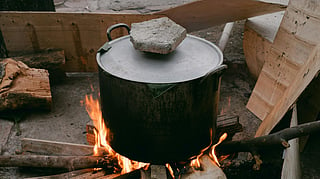

An interesting fact about traditional boiling methods is how they are shaped by the geographic availabilities and restraints. A closer look at the methods and where they are usually followed gives one a broader understanding of how local materials contribute to the style of cooking. At an age when one has gone through basic amenities crisis and the culinary world, as a whole, is returning to adopt indigenous methods of cooking for fine-dining or experimental cuisines, here’s a look at some traditional boiling methods.
From the green lands of the North East to the coastal cliffs, here are four sustainable and indigenous boiling methods.
Known for using fresh foraged ingredients bamboo, in North East India is not only eaten but also used as a tool for boiling. Fresh bamboo are cut and shaped like thick tubes which are stuffed with rice, meat, herbs and water. After closing the mouth of the bamboo, the whole apparatus is placed on top of the burning fire. This slow boils the contents inside and gives off a fascinating aroma along with a delicious taste. Moreover, the naturally water-resistant property of the bamboo doesn’t let it burn, and instead lends a subtle earthy flavour to the food.
If you have tasted the famous Bengali food, Paturi, then you already know what the leaf boiling method is. This method is adopted in kitchens across many States. Food, especially fish is marinated and wrapped in banana, teak or turmeric leaves. To keep it in place it is tightly tied with a string. The whole tied-leaf is then placed over boiling water or directly over embers. Leaves naturally trap steam, which helps in the food to cook and also lends a slightly herbal flavour if banana or turmeric leaves are used.
Heat the stone over the fire and place it inside the vessel which has the food to be cooked along with water. The heat from the stone will raise the water temperature to a boiling point, and this will in turn, cook the dish. One of the earliest modes of boiling, it is predominantly used in Japan, China and native American communities, although, they can be seen in practice in Nagaland and Ladakh. While a regular stone will not alter the flavour profile, a mineral-coated stone might make subtle flavour changes.
This is prominent among the indigenous communities living near the coastal areas where coconuts are available in abundance. Once the flesh from the coconut shell is taken out, the leftover shell is used as a vessel. The food to be cooked is placed inside these shells and the shell is placed on top of fire – direct or indirect. This is used for both boiling and heating food. Once done, the flavour profile gets altered with slightly sweet notes.
For more updates, join/follow our WhatsApp, Telegram and YouTube channels.