
- LIFESTYLE
- FASHION
- FOOD
- ENTERTAINMENT
- EVENTS
- CULTURE
- VIDEOS
- WEB STORIES
- SPORTS
- GADGETS
- CAR & BIKE
- TRAVEL
- SOCIETY
- GALLERIES
- NORTH EAST
- INDULGE CONNECT

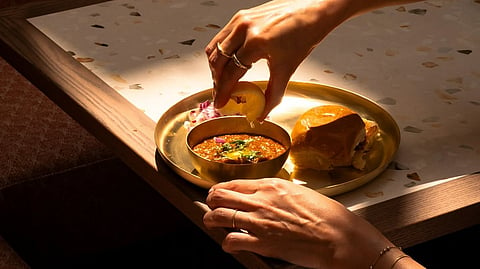
When the 89-year-old Indian snacks and sweets brand Haldiram opened its first full-service UK restaurant in Leicester Square this June, footage of the line snaking around the corner of one of London's busiest tourist squares was everywhere. The 3,000-square-foot, roughly 110-seat restaurant became, for a few giddy weeks, the most talked-about address in London's food scene — not for molecular gastronomy or a Michelin nod, but for pani puri, chole bhature, raj kachori and pav bhaji.
Leicester Square is used to crowds — it's home to cinemas, chain restaurants, etc. But this was different. Third-generation owning member Rhea Agarwal, who is steering the brand's UK and European push, has described London as a natural fit. She said,"London felt like a natural choice."
The brand already had run a production facility in Southall supplying packaged sweets to Britain and Europe since 2018. But a sit-down, street-food-style restaurant in the heart of the West End was something new.
This is the question that’s been quietly running underneath all the viral videos: is this a diaspora phenomenon, or has the brand genuinely crossed over to British regulars?
The honest answer, going by the footage and the commentary around it, is: mostly the former, with the latter creeping in. Most of the viral clips and captions frame the opening explicitly as a diaspora event — memes about "every Indian's weekend plan," jokes about it being the new pilgrimage site for London's Desi community, and a flood of comments from British Indians reminiscing about the brand's outlets back home in Delhi, Nagpur or Mumbai.
But coverage of the launch has repeatedly noted a mixed crowd — curious tourists passing through Leicester Square, food-content creators drawn by the visual spectacle, and local Londoners who'd perhaps only known the brand as the gold-packet snack brand on the shelf of their nearest Indian grocery store. For a chunk of that crowd, this was a first real introduction to chaat as a sit-down experience rather than a supermarket snack.
Not everyone was won over. The launch also triggered a fairly candid social media debate: some diners felt the food didn't live up to the wait, with a few pointed comments about pricing — a plate of pani puri in London running to roughly ten times what it costs at a Haldiram's back in India — and others questioning whether queuing for over an hour made sense for dishes many could make, or already buy pre-packaged, at home.
Food trucks serving chaat and dosa have become fixtures at festivals from Toronto to Sydney. London and New York both now run dedicated Indian street food festivals drawing sizable crowds. Many have started drawing comparisons to sushi's own decades-long journey from 'exotic novelty' to everyday mainstream fixture in Western cities.
As of now, the Leicester Square outlet is temporarily closed for scheduled electrical works unrelated to the restaurant's performance, with a promise to return soon. Given the reception so far, it's unlikely to stay quiet for long.
For more updates, join/follow our WhatsApp, Telegram and YouTube channels.