
- LIFESTYLE
- FASHION
- FOOD
- ENTERTAINMENT
- EVENTS
- CULTURE
- VIDEOS
- WEB STORIES
- SPORTS
- GADGETS
- CAR & BIKE
- TRAVEL
- SOCIETY
- GALLERIES
- NORTH EAST
- INDULGE CONNECT

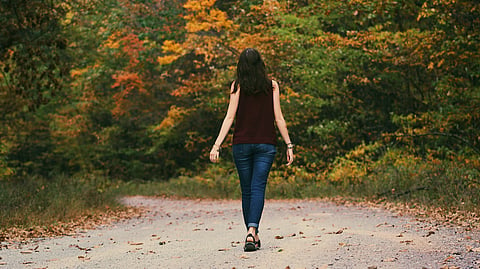
Awe-walking is proving to become a scientifically supported wellness activity that translates traditional movement routines into a means for improved mental health. Described by Dacher Keltner, psychology professor at University of California Berkeley in a recent podcast appearance, Awe-walking is designed to balance observation and curiosity with attention outside of oneself, as opposed to common walking techniques that involve heightened physical activity goals. Awe-walking allows individuals to pay attention to their environment around them rather than dwelling on deadlines, projects not completed, or their own problems.
Awe-walking has been examined in adults aged 75 and older by Keltner and colleagues, contrasting weekly walks to awe walks. The participants were encouraged to experience settings that evoke a sense of curiosity and take notice of both minute and broad aspects of their surroundings, while emphasizing awareness that extends beyond themselves.
The interest in Awe-walking trails the popularity of other walking exercises, including the Japanese walking and the 5-4-3-2-1 Walking Pyramid. Yet the essence of Awe-Walking is in the mental stimulation rather than the activity level. According to Dacher Keltner, an “awe walk” involves a walk during which the focus of attention moves outward so that the walkers may chance upon feelings of awe through mere observations of sights, sounds, and scenes.
A key feature of awe is that it encourages what we call 'small self,' a healthy sense of proportion between your own self and the bigger picture of the world around you. The research underlines that awe does not rely on rare experiences; simple moments such as flowers in bloom, sunsets, kind actions, music, art, moral beauty, and brilliant ideas can all evoke it. At the same time, Awe-Walking offers a practical pathway through daily movement to emotional balance and perspective by incorporating mindful observation.
For more updates, join/follow our WhatsApp, Telegram and YouTube channels.