
- LIFESTYLE
- FASHION
- FOOD
- ENTERTAINMENT
- EVENTS
- CULTURE
- VIDEOS
- WEB STORIES
- SPORTS
- GADGETS
- CAR & BIKE
- TRAVEL
- SOCIETY
- GALLERIES
- NORTH EAST
- INDULGE CONNECT

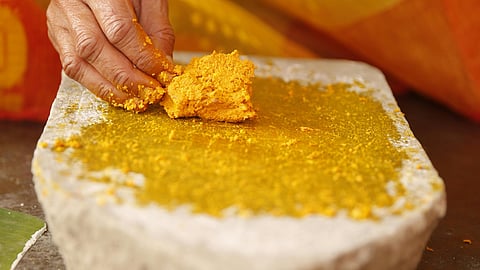
While packaged haldi is popularly used across kitchens, many Indian households still rely on non-branded haldi or raw turmeric sourced from neighbourhood kirana shops or local suppliers. However, unadulterated haldi has emerged as a serious issue as several people across the country have fallen prey to fake, inauthentic or toxic haldi which has harmed them.
You apply the Haldi on your body, wait it out and then feel an intense itch and swelling on the body. This is a result of adulterated Haldi and it can make you end up in the hospital rather than the wedding mandap.
Did you get yourself raw haldi, which you will pound immediately to make the mixture? Then are some quick ways to detect adulteration.
Colour Test: Pure turmeric is deep golden-yellow in colour. Take a little bit and place it on a white paper. Observe the colour for a while. If the colour remains golden-yellow, then it is natural. If you notice the particles turn into uneven colour, orange or bright yellow.
Palm Test: Rub turmeric powder between your palms and observe. If your palms have a yellow stain or haldi particles sticking to the skin, then it is natural in origin. But if there is no colour or very little colour and the particles fall off easily, then it is a concern.
Water layering Test: Take a glass of water and put one teaspoon of turmeric powder. Do not stir. If the water turns light yellow and the particles settle at the bottom, then it can be put on the body without worry. However, if you notice that the haldi powder floats on the water and the colour turn brown-ish yellow, then one must avoid it.
Smell Test: Smell a pinch of haldi powder. If you notice an earthy aroma then it is pure turmeric otherwise, it is diluted with chemical impurities.
Chalk Test: Many a times, you have chalk mixed with turmeric to increase volume. To detect the presence of lemon or chalk, mix turmeric powder with water and add 1-2 drops of lemon juice. If you notice that there is no reaction to this mixture, then the powder is genuine. In case there is a fizz, aeration or bubbles, then it is adulterated.
For more updates, join/follow our WhatsApp, Telegram and YouTube channels.