
- LIFESTYLE
- FASHION
- FOOD
- ENTERTAINMENT
- EVENTS
- CULTURE
- VIDEOS
- WEB STORIES
- SPORTS
- GADGETS
- CAR & BIKE
- TRAVEL
- SOCIETY
- GALLERIES
- NORTH EAST
- INDULGE CONNECT

For decades, ceilings were little more than blank canvases—painted white, fitted with recessed lights and quietly forgotten. Today, however, the so-called ‘fifth wall’ has emerged as one of the most expressive surfaces in interior design. From colour-drenched finishes and handcrafted plaster to sculptural lighting and warm timber detailing, ceilings are no longer just functional elements. They’re shaping the mood, proportions, and personality of a room.
The rise of bespoke ceiling design
Much like statement flooring did a decade ago, decorative ceilings are experiencing a renaissance. The shift is driven by homeowners who are increasingly seeking personalised spaces rather than catalogue-perfect interiors. Designers agree that the ceiling is no longer something to be concealed behind layers of false construction—it is an architectural opportunity waiting to be explored.
“The ceiling has finally stopped being an afterthought,” says Shivani Gupta Mittal, principal designer at House of Lalittya. Instead of relying on conventional cove lighting, homeowners are embracing colour, texture and artisanal finishes to create rooms that feel warm and cohesive.
Painted ceilings
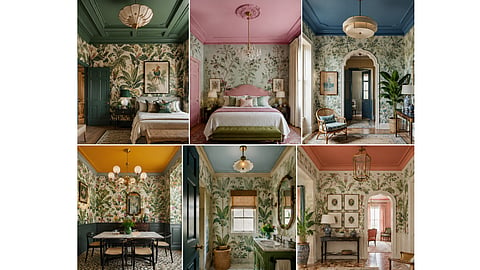
One of the most noticeable trends is the return of painted ceilings. Rich earth tones, soft terracottas, olive greens and deep charcoals are finding their way overhead, blurring the line between walls and ceilings. Colour-drenching—a technique where walls, ceilings and even trims are painted in the same hue—creates enveloping spaces that feel sophisticated and contemporary. High-gloss lacquer finishes are also making a comeback, reflecting light beautifully while adding a sense of drama.
Texture play
Texture is equally influential. Lime plaster, Venetian plaster and micro-cement are replacing flat gypsum finishes with handcrafted surfaces that celebrate imperfection. Fluted timber panels, slatted wood ceilings and subtle mouldings introduce warmth while lending architectural depth without overwhelming a room. Rather than relying on excessive ornamentation, today’s ceilings favour tactile materials and restrained detailing.
Paper trails
Wallpaper, once reserved for feature walls, has also made its way to the ceiling. Designers are using it strategically in powder rooms, bedrooms, bars and studies, where patterned ceilings create unexpected moments of delight. The effect is dramatic without being overpowering, particularly when paired with understated furnishings.
Wood dominate
Materiality has become central to ceiling design. Wood continues to dominate, whether in reclaimed beams, linear battens or contemporary fluted finishes. Handmade plaster, brass inlays, antique mirrors and even upholstered ceilings are being incorporated into bespoke residences, offering both visual richness and improved acoustics.
Yet restraint remains essential. According to Rashi Bothra and Ruchi Gehani, principal designers at Azure Interiors, one of the biggest mistakes homeowners make is treating the ceiling as a decorative object independent of the room. Oversized false ceilings in homes with limited height often compress the space, while excessive lighting details and complicated patterns create unnecessary visual clutter.
Instead, designers recommend allowing the architecture to dictate the intervention. Ceiling height, room proportions and natural light should all inform material choices and detailing. A thoughtfully designed ceiling should quietly elevate the room rather than compete with it.
Lights on
“The most impactful interiors are conceived with lighting and ceiling design working together from the very beginning,” explains Hitesh Rohra, creative director and lighting designer at Mr Light Illumination. While the ceiling provides the architectural framework, lighting reveals its texture, craftsmanship and depth. Layered illumination creates changing moods throughout the day, allowing ceilings to feel dynamic rather than static.
This collaborative approach has also changed how statement ceilings are designed. Rather than relying on oversized chandeliers alone, contemporary interiors combine concealed cove lighting, discreet spotlights, sculptural pendants and carefully positioned accent lights. Each layer has a distinct purpose.
Colour, too, is becoming a powerful design tool overhead. While lighter tones continue to make compact rooms feel airy and expansive, deeper hues introduce intimacy and sophistication.
The message is clear: the future of interiors isn’t only about what surrounds us—it’s also about what lies above. The fifth wall has finally claimed its place as one of the most compelling canvases in contemporary design.
For more updates, join/follow our WhatsApp, Telegram and YouTube channels.