
- LIFESTYLE
- FASHION
- FOOD
- ENTERTAINMENT
- EVENTS
- CULTURE
- VIDEOS
- WEB STORIES
- SPORTS
- GADGETS
- CAR & BIKE
- TRAVEL
- SOCIETY
- GALLERIES
- NORTH EAST
- INDULGE CONNECT

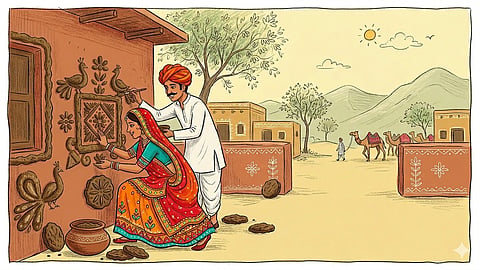
Cow dung walls have been used in Rajasthan as one of the methods of constructing walls in order to make the building cool and comfortable, as well as being environmentally friendly. These methods have gained popularity again due to their inherent ability to maintain a cool atmosphere in hot conditions.
In desert villages, cow dung walls are made using a combination of cow dung and clay. The use of this blend creates an air-permeable layer that helps to cut down heat intake. Consequently, there is a decrease in the temperature of the interior even when the external temperatures are high. Residents note that these walls could cool houses several degrees during hot days.
As opposed to cement plaster, this layer permits air circulation, ensuring that heat is not locked inside the wall structure. Additionally, it can function well during summer and winter seasons, therefore fitting into desert conditions characterized by severe temperatures.
From traditional knowledge, cow dung walls could have antimicrobial qualities. The dried form of this material helps to minimize the existence of microbes as well as preventing the occurrence of moulds in houses. Another quality of this material includes that it prevents mosquitoes and scorpions from entering into the house.
The use of cow dung walls is not only limited to building purposes but also serves the purpose of artistic expression in rural Rajasthan. Artwork called Mandana is painted by women on these walls using naturally obtained colours. The drawings usually include elements from nature, birds, and religious motifs before events such as Diwali.
It combines practicality with tradition and spiritual beliefs. These walls continue to be an essential part of both the routine and culture. The cow dungs during festive periods serve as a crucial element of family tradition and community celebrations.
The idea of cow dung walls has now resurfaced as a green substitute for cement-based building structures. Contemporary inventions based on the concept of cow dung walls seek to make homes comfortable thermally and environmentally friendly at the same time. In light of increasing temperatures, there is renewed interest in such green practices.
The scientists and green architects are also working on methods to improve these building materials to make them more durable, safe, and scalable. This involves finding a balance between ancient knowledge and engineering to promote green housing through rural communities and urban eco-sites.
For more updates, join/follow our WhatsApp, Telegram and YouTube channels.