
- LIFESTYLE
- FASHION
- FOOD
- ENTERTAINMENT
- EVENTS
- CULTURE
- VIDEOS
- WEB STORIES
- SPORTS
- GADGETS
- CAR & BIKE
- TRAVEL
- SOCIETY
- GALLERIES
- NORTH EAST
- INDULGE CONNECT

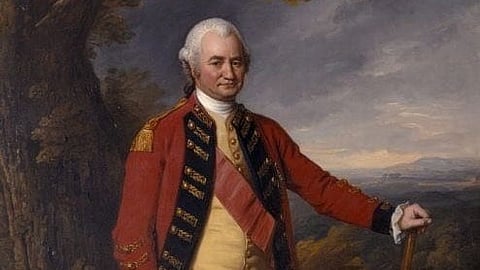
The story of the British Empire in India started off as a trade relation between the British East Indian Company and the Mughal Emperors and other Kings of the Princely states. Finding India as a lucrative colony the East India Company started entering regional politics and administration. After fighting wars to strengthen their hold on the divided country, the seat of power came to the East India Company and much later, directly under the British Crown. And the one name that is unforgettable in cementing the British power hold over India is Robert Clive. Besides the many stories of his valour in India, there are also speculations of his untimely death by suicide in London.
While from the outside it may look like Lord Clive was one of the most powerful men in British India, one need to step into his shoes to understand his position in the larger scheme of things. Lord Clive arrived in Chennai, India as a mere clerk and 1744. With time, he transferred himself into the military department and proved his worth during the Carnatic Wars. For a year between 1755-1756, he became the Governor of Fort St David. He served as the Governor of Fort William, Bengal between 1757- 60 and after the Battle of Plassey; he became the Governor and Commander-in-chief of Bengal between 1765 and 1767.
However, despite all his achievements he was haunted by the burdens and pressures of the society and the very people he represented which gradually tore him apart physically and mentally. He suffered from physical ailments like abdominal pain or gall stones, for which he regularly consumed opium. Throughout his life, he was known to be a man of volatile behaviour and that did cause him sufficient bouts of depression and anger issues, culminating into psychological distress. Moreover, after his return from India, he was accused of exploiting his position and amassing a lot of wealth. He did contest the accusation and all blame was cleared from his name. Even though he cemented British governance in India, his political stances were met with criticism.
What were the circumstances of Lord Clive’s death?
Once deemed as the founder of British Empire in India, now lies buried in St. Margaret’s Church in Shropshire, England. According to reports, Lord Clive was found dead at Berkeley Square on November 22, 1774, due to an injury inflicted to his throat with a knife or penknife. He was only 49 years old at the time of his death and no suicide notes were found.
For more updates, join/follow our WhatsApp, Telegram and YouTube channels.