
- LIFESTYLE
- FASHION
- FOOD
- ENTERTAINMENT
- EVENTS
- CULTURE
- VIDEOS
- WEB STORIES
- SPORTS
- GADGETS
- CAR & BIKE
- TRAVEL
- SOCIETY
- GALLERIES
- NORTH EAST
- INDULGE CONNECT
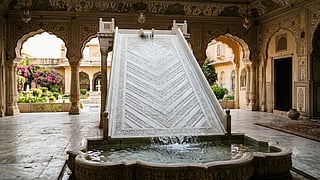

India had suffered from blazing hot summers for many years without any air conditioners, fans, or coolers. But royal palaces remained cool due to the ancient cooling system incorporated within the architecture. It did not depend upon any machine-based technique. Rather, it was done with the help of thick walls, water elements, and other climate-friendly architectural techniques.
The location of a palace had much to do with the cooling of the same. The kings would select their palaces near ponds, lakes, gardens, and hills. Water bodies were bound to reduce the temperature in that area, while the gardens would moisten the atmosphere. There were fountains in the courtyard of most palaces too. Wind blowing on the water body would cool down and then move into the rooms.
One interesting aspect about the ancient cooling system was the Baadgir, aka the wind catchers. Tall buildings were constructed on top of roofs to collect cool winds, which would be blown indoors. Meanwhile, warm air would rise and escape through holes on top. Thus, ventilation occurred continuously without electricity. This technique reportedly originated in Yazd, Iran.
Palace walls were also essential in regulating temperature inside. Thick walls made of mud, limestone, sandstone, and brick worked towards reducing heat transfer. This ensured that the rooms remained cool during the day while releasing the heat stored at night. Sandstone was quite useful since it kept the building cool during summer and warm during winter.
Water conservation was yet another significant technique employed for the purposes of cooling. Step wells, called baolis or vavs, provided naturally cool areas surrounding them. Even some palaces had concealed clay channels built into their walls and ceilings through which water flowed to cool the interiors of these structures. One such advanced technique of cooling is found at Lotus Mahal, Hampi and Agra Fort.
High ceilings, courtyards, verandahs, and slanted chajjas were also an integral part of the ancient cooling system. The higher the ceiling, the cooler it will be. Chajjas prevented the sun rays from entering the house while letting fresh air pass through, and at the same time, they used to save the interiors from monsoon water.
For more updates, join/follow our WhatsApp, Telegram and YouTube channels.