
- LIFESTYLE
- FASHION
- FOOD
- ENTERTAINMENT
- EVENTS
- CULTURE
- VIDEOS
- WEB STORIES
- SPORTS
- GADGETS
- CAR & BIKE
- TRAVEL
- SOCIETY
- GALLERIES
- NORTH EAST
- INDULGE CONNECT

What plant only blooms once every 48 to 50 years, and when it finally does, entire regions start bracing for food shortages? It's bamboo — yes, the stuff pandas eat and your neighbour is using for a privacy fence.
In the hill states of northeast India, particularly Mizoram, this cycle is known as mautam, which roughly translates to ‘the finish of bamboo’. Locals have tracked it for over two centuries, with recorded famines in 1815, 1863, 1911, 1958–60, and 2007–08, spaced almost exactly like clockwork. When a specific bamboo species starts flowering across entire forests at once, people call it a warning.
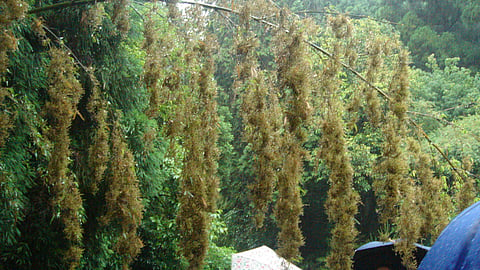
The bloom - Certain bamboo species, most notably Melocanna baccifera, do something almost no other plant does: every single plant of that species flowers simultaneously across huge stretches of forest, then dies. This is called gregarious or mast flowering.
The seed jackpot - That synchronised bloom produces an enormous, nutrient-dense seed crop, far beyond what the forest sees in a normal year.
The rodent boom - Black rats treat this seed windfall like an all-you-can-eat buffet. They gorge, they breed at record speed, and their population explodes.
The bill comes due - Bamboo seeds are a one-time pulse, not a renewable resource. Once they're gone, that now-massive rat population needs somewhere else to eat.
The raid - Rats descend on rice paddies, grain stores, and village granaries in what's grimly nicknamed a rat flood.
The famine - Crops get devastated, food stocks vanish, and hunger follows — sometimes with brutal consequences. The 1958–60 mautam is estimated to have contributed to the deaths of roughly 5% of the affected population.
The bamboo isn’t trying to cause chaos. Scientists believe this is actually a clever survival strategy called predator satiation. By staying dormant for decades and then releasing an overwhelming flood of seeds all at once, the plant ensures rodents simply can't eat everything — guaranteeing that at least some seeds survive to sprout into the next generation of bamboo. The famine is just an unintended, and unfortunate, side effect of a plant's very effective reproductive strategy.
For more updates, join/follow our WhatsApp, Telegram and YouTube channels.