
- LIFESTYLE
- FASHION
- FOOD
- ENTERTAINMENT
- EVENTS
- CULTURE
- VIDEOS
- WEB STORIES
- SPORTS
- GADGETS
- CAR & BIKE
- TRAVEL
- SOCIETY
- GALLERIES
- NORTH EAST
- INDULGE CONNECT

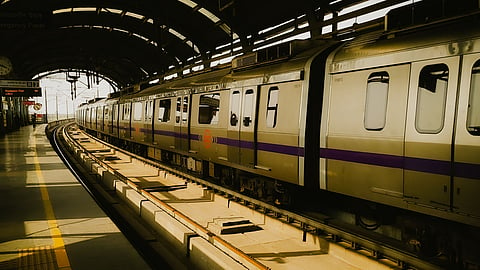
Metro riders in Kolkata are in for a surprise in the near future as they hop in a metro train. They will be taken around the city without a driver. In its latest development, the city is to get its first driverless Metro trains after successful test runs along the Green Line. These trains have been developed to run on Communication Based Train Control or CBTC and will run without someone manually driving it. However, for safety concerns a staff will be present to monitor the train.
The CBTC system works on time-based automated acceleration and breaks which controls the train. The train is fitted with sensors, computers and control panels to maintain speed, elevation, passenger safety and operations. This is a huge step in using technology for everyday operations and is a milestone in the chronology of Kolkata Metro, the first Metro lines ever in India.
What are the pros and cons of this technology?
Just like any new development brings with itself a wave of ups and downs, similarly, driverless metro isn’t devoid of its own pros and cons. While it may trouble public confidence, lead to manual labour layoffs, technical failures, cyber-security risks, and a very high installation cost, the advantages are worth accepting it. First, technology addresses concerns that naked eye might miss. Thus, you are actually safer in the hands of automation. Second, with mechanical inputs, time will be saved and there can be increased frequencies of metro trains. Third, unnecessary delays will also stop. Fourth, while the installation costs are undeniably huge, in the long term, it will balance out the operations costs. Fifth, as the world grows conscious of saving energy, this is certainly a step towards it.
Where else can you find driverless trains in India and the world?
Interestingly, while Kolkata may be the first city to get the metro train network it certainly isn’t the first to get a driverless metro. The first metro of this kind was installed in the Magenta and Pink Lines in Delhi in 2020, followed by Aqua Line in Mumbai, Yellow line in Bengaluru. Kolkata is the latest city to embrace this technology while Chennai is next in line to get it in the Phase II corridors. Other cities like Pune and Surat are also being considered for the introduction of driverless metro trains.
Outside India, countries like Singapore, Dubai, Paris, Doha, Barcelona, Milan, Riyadh, Copenhagen, and others have long embraced an automated system of metros which have elevated its position among locals and tourists alike.
Is it safe to get up on a driverless metro train?
With the world moving towards automation, it is impossible that public transport system will not make use of it. While this is just the one Metro train line which is using this technology, sooner or later, this might become the norm. Understandably, people heave a sigh of relief when they noticed that they are being driven around. Especially, senior citizens may worry if it is a driverless situation. But in reality, automated transport, if maintained well, can increase safety and frequency thereby helping people rather than causing them discomfort.
While the exact date of the launch of the driverless metro operations have not yet been disclosed, one can anticipate that it would be very soon. Official announcements will be made via the Kolkata Metro social media and one can keep an eye on it.
For more updates, join/follow our WhatsApp, Telegram and YouTube channels.