
- LIFESTYLE
- FASHION
- FOOD
- ENTERTAINMENT
- EVENTS
- CULTURE
- VIDEOS
- WEB STORIES
- SPORTS
- GADGETS
- CAR & BIKE
- TRAVEL
- SOCIETY
- GALLERIES
- NORTH EAST
- INDULGE CONNECT

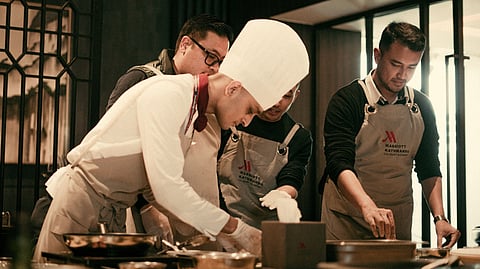
A chef’s hat is undoubtedly one of the most identifiable symbols of professional cooking, but it conveys much more than mere image. This tall and white headwear symbolises a chef's duty, status, and commitment to his work. From ancient kitchens to modern-day restaurants, this white headgear is filled with stories about discipline, mastery, and kitchen culture.
The classic chef’s hat is also known as a toque or toque blanche, meaning ‘white hat’ in French. Even though the word toque refers to any kind of hat with no brim or a little brim, it is significantly linked with the culinary world nowadays. The design is easy to identify, with its tall shape, white colour, pleats, and cylindrical structure.
It is said that the current style of the toque originated in France in the 18th century. Chef Marie-Antoine Carême from France is considered the one who popularized the toque as well as the uniform of the chef in white. Prior to that time, the chefs were wearing the stocking cap known as the casque à mèche.
Marie-Antoine Carême aimed for chefs to get recognition as skilled professionals. He invented a toque made of cardboard, which was a tall, structured hat. According to reports, he wore a toque that was 18 inches tall.
This is the way hats were used in the past for showing the rank of chefs. Executive chefs would wear longer hats. The number of pleats was also related to how much one knew about cooking. It was also believed that 100 pleats meant 100 ways of cooking eggs.
Apart from the symbolism, there are many functional roles played by the chef’s hat. These include keeping food free from hair, maintaining hygiene standards, absorbing sweat, and aiding cooling in kitchens through air circulation.
In today’s time, many chefs opt for various styles according to convenience and job environment. Chef beanie, beret, flat cap, pillbox, baseball cap, and bandana are some styles that are worn in various kitchen environments.
For more updates, join/follow our WhatsApp, Telegram and YouTube channels.