
- LIFESTYLE
- FASHION
- FOOD
- ENTERTAINMENT
- EVENTS
- CULTURE
- VIDEOS
- WEB STORIES
- SPORTS
- GADGETS
- CAR & BIKE
- TRAVEL
- SOCIETY
- GALLERIES
- NORTH EAST
- INDULGE CONNECT

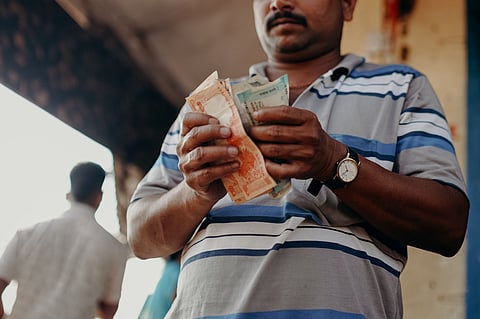
Ever handed out a slightly torn but fully valid note to your vendors or vehicle drivers and been rejected on your face? Well, this is an ongoing problem when it comes to the life-span of money which is essentially made out of paper. However, The Reserve Bank of India might end this woe as they plan to roll out plastic money in the near future. These are not monetary cards but actual notes, just made out of a different material than paper, so that it would withstand the test of time.
For the unversed, plastic money are still physical monetary notes, the ones that have been in use forever, but made with a different material. These are polymer notes made of a plastic film known as biaxially oriented polypropylene (BOPP). Interestingly, it is not a new concept. Countries like Vietnam, United Kingdom, New Zealand, Canada and others have already adopted this mode of making money.
How different is plastic money from paper money?
There are several advantages of polymer or plastic notes over paper-made notes. While the former is made from a plastic film, the latter is made of cotton paper. Plastic notes have a longer life and they do not easily tear away unlike paper notes. They are also water-resistant in nature so you wouldn’t really have to worry if you leave notes in the pockets of your old clothes which go for a spin in the washing machine. Plastic notes are so designed that they can include additional features like security, holograms and transparent windows.
What are the advantages of using plastic money?
Like most things, plastic money has its own sets of advantages and disadvantages. For the better, it has a longer shelf life, is water and tear proof, is difficult to clone, absorb heat, sweat, oils etc and keeps the surface of the note cleaner, shows resistance towards humidity related issues like moisture damage or fungal growth, limits replenishment costs since the money lasts longer and in the long run in sustainable. However, it has a very high manufacturing cost when compared to the cost of making paper money. Although it can absorb heat, overheating can change the structure of the note when it reacts with polymer. Recycling might be difficult and needs special care.
When will the Reserve Bank of India officially start with plastic money?
As per reports, the Reserve Bank of India will introduce plastic money in Rs 10 and Rs 20 denominations as its pilot project. Only if it is successful will it introduce the same for larger denominations. As of today, there has been no official rollout date announcement. The project is still at a preliminary stage but it won’t be far when the familiar notes will look and feel slightly different.
For more updates, join/follow our WhatsApp, Telegram and YouTube channels.