
- LIFESTYLE
- FASHION
- FOOD
- ENTERTAINMENT
- EVENTS
- CULTURE
- VIDEOS
- WEB STORIES
- SPORTS
- GADGETS
- CAR & BIKE
- TRAVEL
- SOCIETY
- GALLERIES
- NORTH EAST
- INDULGE CONNECT

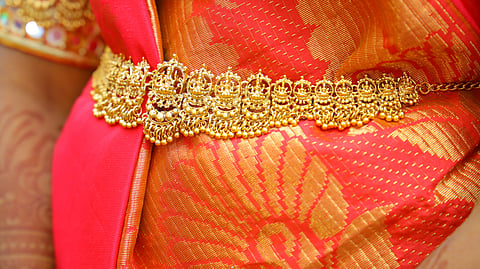
Waist ornaments have been shining for centuries as the embodiment of beauty, heritage, and festivity. However, the story behind Kamarbands goes beyond their beauty. They say a lot about the attitudes of society towards women and their bodies. The ornament not only served as a waist decoration for dancers, brides, and queens over time, but also carried the meaning of discipline, bodily control, and femininity.
The word Kamarband was actually derived from two Persian words; Kamar means waist and band means a belt or anything to fasten on your waist. The history of Kamarbands stretches back to over 4,000 years. Earlier, it was a symbol of beauty and fertility. Women from ancient civilizations used to wear metal belly chains decorated with beads, gemstones and shells. The ornaments later became an essential element of traditions, royal clothing, temple dance costumes, and bridal jewellery.
Nonetheless, the significance attributed to waist jewellery also mirrored society’s expectations of women. Under some customs, such jewellery had the purpose of ensuring that a woman had 'the right' shape of the body. The notion that women must manage their looks and keep a certain body image illustrates the patriarchal understanding of beauty.
In many Indian communities, there was a belief surrounding the control of waist size. Some people believed that a silver waist chain would keep the stomach from expanding and manage belly fat. Others believed silver had special properties that could influence the body.
At present, Kamarband is part of bridal couture, high-end designer wear, as well as day-to-day outfits. Kamarbands have become a symbol of style, heritage, and boldness for many contemporary females. The modern designs generally use gold, silver, pearls, diamonds, and lightweight materials to make the decoration feasible for sarees, lehengas, gowns, and fusion wear. This jewellery has several other names in India, like Oddiyanam in Tamil, Vaddanam in Telugu, Tagdi in Hindi, Kardhani in North India, and Mekhala in ancient Sanskrit texts.
For more updates, join/follow our WhatsApp, Telegram and YouTube channels.