
- LIFESTYLE
- FASHION
- FOOD
- ENTERTAINMENT
- EVENTS
- CULTURE
- VIDEOS
- WEB STORIES
- SPORTS
- GADGETS
- CAR & BIKE
- TRAVEL
- SOCIETY
- GALLERIES
- NORTH EAST
- INDULGE CONNECT

In ancient days, a gentle wave of a fan did more than provide comfort. In royal castles and aristocratic meetings, ancient hand fans disclosed one’s power, sense of taste, and social position. They stood for a sophisticated item made of precious materials, attractive decorations, and rich symbols. From the times of Egyptian pharaohs to European queens, fans were used to define a person’s superiority, elegance, and significance.
Royal beginnings in ancient civilizations
The first fans were used mostly during royal ceremonies. For example, in Ancient Egypt, attendants who stood beside pharaohs used to hold big fans with a gold handle. The material used for making those fans was ostrich feathers and other expensive materials.
In India, the pankha was adopted in daily life as well as religious customs. Made up of palm fronds and woven bamboo, these fans formed part of the concept of life force as well as supernatural significance.
China and Japan changed the ancient hand fans into art objects. First, tuánshàn fans with poems, paintings, and calligraphy became a part of the life of Chinese nobles and scholars. Secondly, in Japan, folding sensu fans found their place in court rites and theatre.
The folding fan changes aristocratic fashion
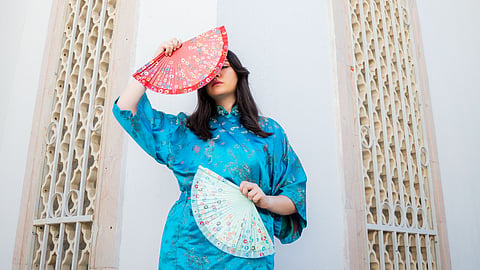
Invented in Japan in the 8th century, the folding fan revolutionized the usage of fans among the people. The folding fan is made from bamboo or wooden ribs connected with silk or paper, making it simple to fold and carry. The folding fan eventually gained popularity all over Asia.
These ancient hand fans were then brought to Europe by merchants and explorers. At the end of the 16th century, they became popular with the upper class in Italy, France, and Spain. European artisans decorated them with lace, gold, silk, and stones, making them items of luxury for aristocrats.
In 18th-century France, fans turned out to be not only fashion items but also a non-verbal communication vehicle referred to as the 'language of the fan.' With the slightest wave of the hand, one could convey love, precaution, or curiosity at a formal event or gathering.
The elegant gowns were often complemented by the ancient hand fans in the European courts. Queens like Elizabeth I and Marie Antoinette used to carry hand fans in prominent events like balls, masquerades, and royal events.
The art of fan-making achieved great prominence. Artisans displayed their skills through the production of sophisticated fans from various materials like ivory, silk, lace, mother-of-pearl, tortoiseshell, and gold. In Paris, fan makers who were known as éventaillistes catered to the needs of aristocratic institutions and collectors. Even now, the ancient hand fans inspire a large number of designers, museums, and collectors.
For more updates, join/follow our WhatsApp, Telegram and YouTube channels.