
- LIFESTYLE
- FASHION
- FOOD
- ENTERTAINMENT
- EVENTS
- CULTURE
- VIDEOS
- WEB STORIES
- SPORTS
- GADGETS
- CAR & BIKE
- TRAVEL
- SOCIETY
- GALLERIES
- NORTH EAST
- INDULGE CONNECT

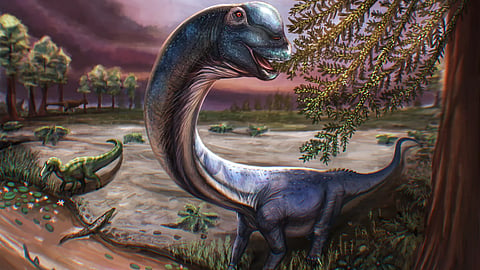
Researchers have discovered bones of a gigantic long-necked dinosaur now thought to be the largest ever located in Thailand, Southeast Asia. The fossils were found in the Chaiyaphum region of northeastern Thailand. As paleontologists started to dig at the location, they discovered vertebrae, ribs, pelvic bones, and massive limb fossils related to a colossal sauropod. The species has been called Nagatitan chaiyaphumensis.
Sauropods were colossal plant-eaters and had dinosaurs like Diplodocus and Brontosaurus in the family. These dinosaurs had tiny skulls, long necks, barrel-like bodies and pillar-shaped legs designed to support staggering amounts of weight.
Researchers estimate Nagatitan chaiyaphumensis stretched out almost 27 metres in length and weighed somewhere between 25 and 30 tonnes. “Naga” refers to the serpent-like mythical beings rooted in Southeast Asian folklore and Buddhist tradition and "titan" is self explanatory. Together, the name means a mythic giant serpent titan.
Scientists say the fossil came from Thailand’s youngest known dinosaur-bearing geological formation. Southeast Asia was gradually transforming during the Early Cretaceous period. Rising sea levels and shifting landscapes submerged large portions of the region under shallow seas, dramatically changing ecosystems and reducing the preservation of later dinosaur fossils. So, Nagatitans may represent one of the final giant land dinosaurs to roam this part of the world. A Thai PhD student even nicknamed it “the last titan.”
There is another reason paleontologists are excited: the bones themselves are unusually informative. Sauropod fossils are often frustratingly incomplete. A tooth here. A vertebra there. But the Nagatitan remains include multiple major skeletal elements, giving scientists a far better chance of understanding how these giant animals moved, evolved and adapted to Southeast Asia’s prehistoric environment.
Paleontology has a habit of starting with one fragment and ending with an entire lost world. The first Tyrannosaurus rex fossils were incomplete too. So were many of the great Argentine titanosaurs. One exposed bone becomes two, then a quarry, then an ecosystem.
That possibility now hangs over Chaiyaphum province.
For Thailand, the discovery is more than scientific prestige. It is cultural and historical validation. Southeast Asia was not some forgotten dinosaur backwater. It hosted giants. The land that now grows rice fields and rubber trees once shook beneath the footsteps of one of the largest animals the region had ever produced. And somewhere beneath the soil, there may still be more titans waiting.
For more updates, join/follow our WhatsApp, Telegram and YouTube channels.