
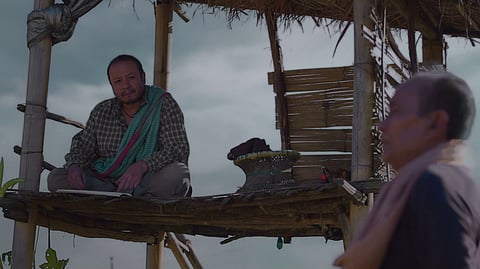
Filmmaker Rakesh Moirangthem on the real-life tragedies and fading traditions behind Phouoibee

Filmmaker Rakesh Moirangthem’s latest outing, Phouoibee (The Goddess of Paddy) set in rural Manipur, explores the aftermath of a tragedy that leaves a farmer with a mental disability, while opening a window to a community where agriculture, faith, and survival remain deeply intertwined. Named after the Meitei goddess of rice and fertility, Phouoibee is both a portrait of personal loss and a reflection on the precarity of farming life in Northeast India.
Phouoibee is more than a film about farming in Manipur
On the sidelines of the 18th Habitat Film Festival 2026, where the film was screened alongside a diverse slate of regional cinema from across India, Rakesh spoke about the real-life incidents that inspired the film, the challenges of independent filmmaking in Manipur, and why cinema remains a vital archive of memory, culture, and lived experience.
What was the starting point for Phouoibee?
The story begins from a grounded, socio-realistic perspective, rooted in the everyday lives of farmers and their deep connection to prayer, invoking Phouoibee, the Meitei goddess of rice and fertility. From this starting point, the film unfolds into a larger exploration of the sacred yet fragile bond between agricultural labour, nature, and deeply rooted spiritual faith.
Why did you choose Phouoibee as the emotional anchor of the film?
Between 2017 and 2025, several incidents in Manipur saw harvested paddy stalks deliberately burned by miscreants, destroying the hard-earned livelihood of farmers. These tragic acts robbed families of a year’s labour, shattered dreams of overcoming poverty, and threatened their basic survival. I made this film as an appeal to society—to acknowledge the suffering of farmers and to ensure such painful incidents never happen again.
What did Iboyaima, the farmer-painter from the film, represent to you while writing the story?
Iboyaima represents a hardworking farmer and painter who has raised his daughter alone since losing his wife during childbirth. Coming from a poor and unstable family background, he struggles to survive as a non-landowning farmer. Through his paintings, he reflects the struggles, emotions, and experiences of his life journey, making his art a representation of resilience, sacrifice, and the realities of rural life.
The relationship between Meitei culture and agriculture is central to the narrative. Do you think younger generations are slowly losing that connection today?
The younger generation is gradually losing connection with traditional farming practices. Earlier, during cultivation and harvesting, farmers joyfully sang Manipuri folk songs called Khulang Eshei and used bullock carts instead of machines. Today, many of these traditions have been replaced by modern technology. Through this film, we hope to preserve and highlight traditional farming practices, encouraging young people to reconnect with Manipuri culture.
How has your journey as a Manipuri filmmaker been?
As an independent Manipuri filmmaker, I face many challenges, especially in terms of funding. Unlike neighbouring states such as Assam and Meghalaya, Manipur still does not have proper policies to support filmmakers. There is a lack of a strong market for regional cinema. When we try to approach OTT platforms, our films are often not taken into consideration because regional films are believed to have a limited reach. Despite all these difficulties, we continue making films through self-funding, driven purely by our passion and love for cinema. Most of the time, we are unable to recover the actual expenditure spent on filmmaking. Even when we create good films, they are mostly limited to screenings and film festivals, and the journey ends there without proper commercial support. This has been the reality of my journey as a filmmaker in Manipur.
What do you hope audiences outside Manipur take away from Phouoibee?
Phouoibee highlights the importance of food and explores the struggles faced by farmers. We wanted to show the harsh realities of farming and the challenges agricultural communities endure every year in Manipur. One of the major issues shown in the film is the burning of paddy fields, an incident that repeatedly happens in the state and deeply affects the lives of farmers and local communities. We hope to create awareness among audiences outside Manipur and show them the painful realities that people here experience. We want viewers to realise that such incidents should not happen anywhere in the world and that the lives and struggles of farmers deserve greater attention, respect, and protection.