
- LIFESTYLE
- FASHION
- FOOD
- ENTERTAINMENT
- EVENTS
- CULTURE
- VIDEOS
- WEB STORIES
- SPORTS
- GADGETS
- CAR & BIKE
- TRAVEL
- SOCIETY
- GALLERIES
- NORTH EAST
- INDULGE CONNECT

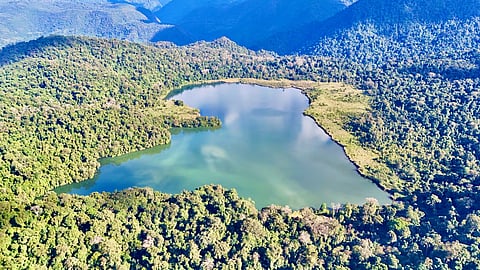
One of the most striking things about North East India is its beauty. Complete with hills, valleys, mountains ranges, National Parks, and unthinkable diversity in flora and fauna, it has always been the subject of awe. While tourists visit every year to witness the beauty with their own eyes, experts consider the place to be a treasure trove of knowledge and a region which needs ample preservation, from the nascent stage. Keeping this in mind, Glaw Lake in Arunachal Pradesh becomes the first RAMSAR site from the State and the 101st in India. While it was always on the list of tourists, now it receiving global spotlight post the announcement.
For the unversed, a RAMSAR site is a wetland area which is brought under the aegis of the Ramsar Convention on Wetlands list, a treat which was adopted and brought to effect in 1971 in Iran. This body works towards protecting of wetlands, conservation of biodiversity, promotion of sustainability, protecting the natural habitats of fish, birds, wildlife and migratory species and encourages Nations to pay attention towards the dwindling cover of wetlands and conserve them. Glaw Lake, also called Glaw Tuqi or Hawai Lake is surrounded by mountains and streams. Situated in Lohit District of Arunachal Pradesh in the Eastern Himalayas, it lies within the Kamlang Tiger Reserve in the Mishmi Hills and is a well-known Indo-Myanmar biodiversity hotspot. These very factors made the convention consider it for a designated spot.
However, one must also note that India has several RAMSAR sites. Some of the most popular ones are Sundarban and East Kolkata Wetlands in Bengal; Deepor Beel in Assam; Loktak Lake in Manipur; Chilika and Bhitarnika Mangroves in Odisha; Sambhar Lake in Rajasthan; Pallikaranai Marsh in Tamil Nadu and others.
Planning a visit to Glaw Lake?
To visit Glaw Lake, you can take a flight to Arunachal Pradesh or reach Assam and take connecting transport. Your next destination is Wakro from where you can trek to Glaw Lake. Surrounding sites would include the Kamlang River, suspension bridge, forests, mountain streams, and more. Having a local guide with you is heavily encouraged. The best time to visit is post monsoon during October to March. When here, explore the place through hikes and treks, take photographs, do some bird-watching or wildlife observation, camp (if permitted), fishing (depends on regulation) and orchid spotting.
Why having Glaw Lake as a RAMSAR site matters?
Having Glaw Lake on the RAMSAR list is a proud moment for India which started at 26 sites and has now expanded to 101. Moreover, it is the first site from the Arunachal Pradesh while its neighbouring states Assam and Manipur are already on the list. Moreover, it also spotlights the Kamlang Tiger Reserve beyond the very popular Kaziranga and Pobitora. Here one can spot (if lucky) clouded leopards, tigers, asiatic black bears, hornbills, hoolock gibbons and more. The lake itself is a picturesque site with emerald green waters. Moreover, it is expected to now attracted more tourists to the State and a global spotlight would help in protection of the region as well.
For more updates, join/follow our WhatsApp, Telegram and YouTube channels.