
- LIFESTYLE
- FASHION
- FOOD
- ENTERTAINMENT
- EVENTS
- CULTURE
- VIDEOS
- WEB STORIES
- SPORTS
- GADGETS
- CAR & BIKE
- TRAVEL
- SOCIETY
- GALLERIES
- NORTH EAST
- INDULGE CONNECT
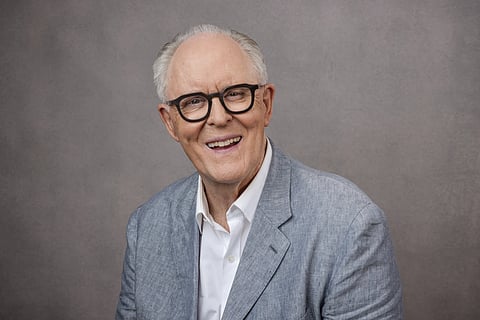
John Lithgow is returning to Broadway, but not in a role audiences might expect from the two-time Tony Award-winner. Known for his versatility on stage and screen, Lithgow will step into the shoes of Roald Dahl in Giant, a new play that casts a searching light on the darker corners of the beloved children’s author’s life.
Written by director-turned-playwright Mark Rosenblatt, Giant arrives in New York on 11 March, following a celebrated run in London where it won the Olivier Award for Best New Play earlier this year. Lithgow, who made his West End debut with the production, also earned his first Olivier for his portrayal of Dahl. “You go back and read his writing after seeing the play and you see dark strains in it, which you knew were there,” Lithgow says. “But you suddenly see it in a different light when you see this play.”

Set in the summer of 1983, the drama unfolds over a single afternoon at the Dahl family home. At its centre is a crisis: Dahl is on the cusp of releasing The Witches but finds himself mired in controversy following antisemitic remarks. Jewish representatives from his British and American publishers arrive to confront him, leaving Dahl with a stark choice — to issue a public apology or to risk the reputation that underpins his career.
For Rosenblatt, the idea of exploring Dahl’s contradictions came after learning about antisemitism in Britain’s Labour Party. “It’s a play about a complex person, a complex human being who created some of the great treasures of my childhood and whose work I still read to my own kids,” he explains. “I guess it’s asking people in some ways to hold two truths in their heads at the same time.”
That duality is central to the play: Dahl as the creator of magical stories such as Charlie and the Chocolate Factory, Matilda and James and the Giant Peach, and Dahl as a man whose public statements have since cast shadows over his legacy. “He was a loved writer for very good reasons,” Lithgow reflects, “and it was really only after his death that so much of this information about his antisemitism came into focus. He was sort of spared the era of cancel culture.”
Giant is directed by Nicholas Hytner, with set designs by Bob Crowley. Its London premiere at the Royal Court Theatre drew strong praise, with Variety calling it “a powerhouse play whose time has most definitely come” and The Times hailing it as “a more enthralling play than we’re likely to see in the next decade.”
Beyond its historical setting, the play resonates strongly today, touching on contemporary questions about whether — and how — we separate art from artist. Yet Rosenblatt insists Giant does not lean on conclusions. “It’s not a play that wants to tell people what to think,” he says. “It just invites people to think.”
Lithgow, who is also an author of children’s books and music, finds a personal irony in playing Dahl at this moment. Alongside Giant, he is set to portray Albus Dumbledore in HBO’s forthcoming Harry Potter television series. “It’s kind of extraordinary that I’ve ended up playing these two characters at such a moment concurrently,” he says. “So here I am doing a variation on a theme.”
As Giant prepares for its Broadway debut, the production promises not only to reframe how audiences view Dahl but also to spark fresh discussions about the intersection of art, literature and legacy.