
- LIFESTYLE
- FASHION
- FOOD
- ENTERTAINMENT
- EVENTS
- CULTURE
- VIDEOS
- WEB STORIES
- SPORTS
- GADGETS
- CAR & BIKE
- TRAVEL
- SOCIETY
- GALLERIES
- NORTH EAST
- INDULGE CONNECT

The evolution of Indian airport experiences, moving beyond mere transit to becoming cultural and architectural landmarks. While the Bengaluru airport’s Terminal 2 garnered much attention for its Terminal in a Garden concept, the curated art walk and recently welcomed the Museum of Art and Photography onto its campus.
Similarly, even Delhi’s Airport introduced live cultural performances. But before we do a deep dive into these, let’s talk about the new entrant in this category. Assam’s Lokpriya Gopinath Bordoloi International Airport (LGBIA) is now in the global spotlight for its new Terminal 2 (T2), which has won the prestigious International Architectural Award 2025.
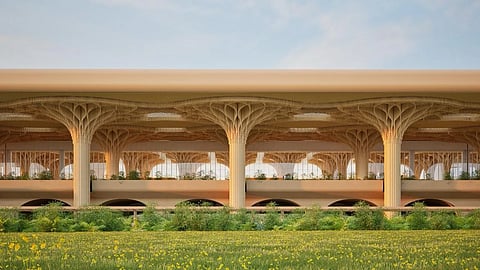
This recognition places it among only seven airports worldwide to be honoured for outstanding architectural excellence. The new Terminal 2 is not just a building; it’s a tribute to the wonders of Northeast India. The architectural concept is deeply rooted in the natural beauty, biodiversity and cultural heritage of Assam. The design draws profound inspiration from the resilience of bamboo and the grace of the foxtail orchid, which is the state flower of Assam.
This thematic design is reflected in the structure’s many columns, which resemble tea-trunks and the curved, overlapping rooftop, giving the airport an earthy, organic feel. The terminal tells a story of Assam’s rich heritage. The interior spaces pay homage to the Brahmaputra River, the island of Majuli and local craftsmanship. The use of traditional motifs, such as the gamocha (a traditional Assamese towel), is also integrated into the design. Unlike the older airports that usually echo chaos and confusion, its aesthetic is so immersive that the terminal feels less like an airport and more like a beautiful biodiversity park. The large, open spaces, combined with abundant natural light, create a calming and refreshing ambience.
Assam’s biodiversity and traditions
The terminal is positioned as a gateway that provides an immersive introduction to Assam’s biodiversity and traditions. The design and cultural motifs serve as an educational and welcoming experience for travellers. The airport is equipped with shops and food outlets that showcase the local flavours and handicrafts. Passengers can explore traditional items like handwoven fabrics, Assam tea and bamboo products and taste authentic Assamese cuisine.
The new terminal will feature state-of-the-art facilities like Digi Yatra-enabled egates, advanced security systems and an efficient passenger flow design, all contributing to a smoother and more comfortable journey. It's a perfect example of how modern Indian airports are moving beyond utilitarian structures. By blending advanced technology and sustainability with a deep appreciation for local culture and nature, it’s creating a space that is not only highly functional but also a true ambassador for the region it serves. And which other Indian airports are joining this list, you ask?
Indian airports are joining this list
Chhatrapati Shivaji Maharaj International Airport and The Kempegowda International Airport Terminal 2, are a no-brainer for its culturally curated art journeys but did you know that Hyderabad’s Rajiv Gandhi International Airport has a dedicated art gallery under a program called Art@RGIA? This initiative is a visual arts initiative aimed at showcasing the unique artistic and cultural life of Hyderabad and the surrounding region. They have also introduced therapy dogs to ease travel stress.
Additionally, Delhi’s Indira Gandhi International Airport (IGI) has launched a new initiative to enhance the passenger experience by showcasing Indian culture through live performances and art. In a first for any Indian airport, IGI’s new program, DEL Vibes, aims to transform the typical waiting time into a rich, cultural journey. The initiative, which is active across all terminals, features a daily schedule of performances and activities. The program includes live performances of Indian classical dance forms like kathak and bharatanatyam, as well as instrumental recitals with traditional instruments such as the sitar, santoor and sarangi.
Art & culture
Beyond performances, DEL Vibes also offers hands-on craft sessions and artist-led demonstrations. This allows passengers to actively participate and engage with India’s traditional arts and crafts. This new initiative builds on the airport’s existing focus on art.
IGI has long featured largescale installations, such as the twelve mudra sculptures at Terminal 3 and a 12-foot surya namaskar statue, which are designed to give both domestic and international travellers a glimpse into India’s rich heritage. These airports are leading the way in transforming the passenger experience, making travel not just about the destination, but also about the journey itself. They are becoming cultural gateways, offering a glimpse into India’s rich and diverse heritage.
For more updates, join/follow our WhatsApp, Telegram and YouTube channels