
- LIFESTYLE
- FASHION
- FOOD
- ENTERTAINMENT
- EVENTS
- CULTURE
- VIDEOS
- WEB STORIES
- SPORTS
- GADGETS
- CAR & BIKE
- TRAVEL
- SOCIETY
- GALLERIES
- NORTH EAST
- INDULGE CONNECT

Yes, we say this because the majority of Indians not not accustomed to harsh winters. However, European summers have been overtly popularised and now even face protests in several tourist destinations thanks to overcrowding. So, what's a better time to visit? Early March, because it is the bridge between winter and spring. It’s what travellers call the shoulder season because it offers a level of intimacy with European cities and towns that you simply can't get in June, July or afterwards.
Innsbruck is the ultimate bridge destination because you can spend your morning in the Old Town (Altstadt) sitting at a sidewalk cafe with a jacket, then take the Nordkette Cable Car (designed by Zaha Hadid) directly from the city centre to the peaks. In 20 minutes, you’ll go from 11°C spring air to the deep snow of the Alps at 2,300 meters. The city also boasts the Swarovski Crystal World, the Tiroler Volkskunstmuseum (Folk Art Museum), the Alpine, Europe's highest Zoo, Goldenes Dachl and the Imperial Palace in Hofburg.
While Lisbon is a bustling city, Sintra is a forested mountain, UNESCO-listed town filled with pastel-colored palaces famous for its Romanticist architecture. In March, the Atlantic mists wrap around the stone turrets of the Pena Palace, making it feel like a film set. The gardens of Quinta da Regaleira begin to bloom and the intense summer humidity hasn't arrived, making the steep hike up to the Moorish Castle, Palácio Nacional de Sintra, Monserrate Palace and catching coastal views much more comfortable.
Located in the Alsace region, Colmar looks exactly like the village from a Disney movie, with timber-framed houses and flower-lined canals. March is the quiet period after the Christmas markets and before the Easter flower displays. Colmar is one of the driest cities in France due to its location at the foot of the Vosges Mountains but March brings Winstub, Alsatian wine pub crawl when one can sit in centuries-old tavern and enjoy a glass of Riesling without needing a reservation weeks in advance.
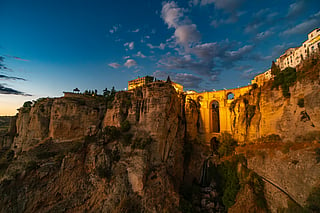
Perched atop two massive cliffs connected by the 18th-century Puente Nuevo bridge, Ronda is one of Spain's oldest towns, split by El Tajo Gorge, a deep canyon, with the Guadalevín River at the bottom. Known for inspiring writers like Hemingway, this historic old town offers a centre for bullfighting, Plaza de Toros de Ronda, Spain's oldest and most significant bullrings, now a museum. Tour around the well-preserved Baños Árabes, Arab baths and Mondragón Palace with beautiful gardens. The valley below the cliffs turns a vibrant in early spring — colours which completely disappear and turn brown by the time the June heat hits.
Here is where you spot the first yellow daffodils, signaling the end of winter. While larger than a village, the historic center of Bruges feels like a frozen-in-time medieval enclave sporting cobblestone streets and Gothic architecture as a UNESCO-listed historic centre. Explore the city's unique network of canals with a boat trip and visit spots like the Rosary Quay, Belfry, Markt square, Burg square, Church of Our Lady that houses Michelangelo's Madonna and Minnewater Park.
For more updates, join/follow our WhatsApp, Telegram and YouTube channels.