
- LIFESTYLE
- FASHION
- FOOD
- ENTERTAINMENT
- EVENTS
- CULTURE
- VIDEOS
- WEB STORIES
- SPORTS
- GADGETS
- CAR & BIKE
- TRAVEL
- SOCIETY
- GALLERIES
- NORTH EAST
- INDULGE CONNECT

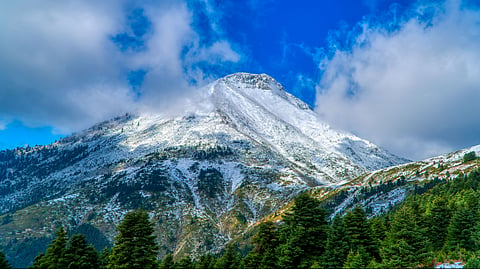
In a latest turn of events, Mt Olympus in Greece has been deemed as a UNESCO World Heritage Site as mixed property, renowned for both its biodiversity and cultural significance. This geographical heritage lies at the border of Macedonia and Thessaly in northern Greece. Interestingly, long before making it to the UNESCO list, it was declared a National Park and Biosphere reserve, drawing hundreds of visitors every year. The entry to the List would now ensure more and more visitors in the days to come.
For those who are aware of Greek mythology, Mt Olympus is not a new place. Known as the seat of power, the mountain is the home of the King of Gods, Zeus along with Hera, Poseidon, Athena, Apollo, Ares, Aphrodite, Artemis, Hestia, Demeter, Hermes, and Hephaestus. In fact, descriptions of the Gods and Goddesses residing above the humans and keeping a watch over them while feasting on nectar is quite common in Greek literature and Homer’s Iliad and Odyssey. While there has been no proof of the Gods living there save mythical oral traditions, archaeological discoveries of churches and temples suggest that the area has always been the seat of spiritualism.
The seat of biodiversity
Apart from having strong spiritual and mythological importance, the various flora and fauna found around the region had earned Mt Olympus the status of a National Park in 1938, a first for Greece. Thereafter, it also became a UNESCO biosphere Reserve in 1981before earning another feather in the cap this July. One can find over 1700 species of exclusive plants, birds like golden eagle and peregrine falcons, wolves, wild boar, fox, and a landscape that changes from dense pine to fir and beech trees. That apart, one can notice limestone cliffs, gorges, and take a tour of its highest peak, Mytikas which sits at 2918 metres above sea level.
How to visit Mt Olympus?
Mt Olympus is open to visitors all year round. But depending on your purpose you may choose the time. If you want to sightseeing and hike, then May to October is the best time. For those who want to summit the peal, July to September is ideal and for professionals who can wade through snow and rocks, the winter months would be an ideal choice. The gateway to Mt Olympus is Litochoro which is 5-6 hours b train or car from Athens.
What to see?
The area offers hiking trails, scenic beauty and activities which bring you close to nature. First, if you are adventurous enough then attempt a two day trek to Mytikas, the highest peak. Second, go on a chasing the Enipeas Gorge through a path which winds through waterfalls, forests and streams. Third, if you are into photography then patiently wait in the forests to check out the variety of wildlife, birds and plants. Fourth, scenic points like the Spilios Agapitos should not be missed during sunrise and sunset. Fifth, adventure sports lovers can opt for mountain biking too. Other attractions around the area include Leptokarya, a seaside resort; Old Panteleimon, a stone village; Platamon Castle and dion Archaeological Park.
For more updates, join/follow our WhatsApp, Telegram and YouTube channels.